
Last updated October 16, 2026
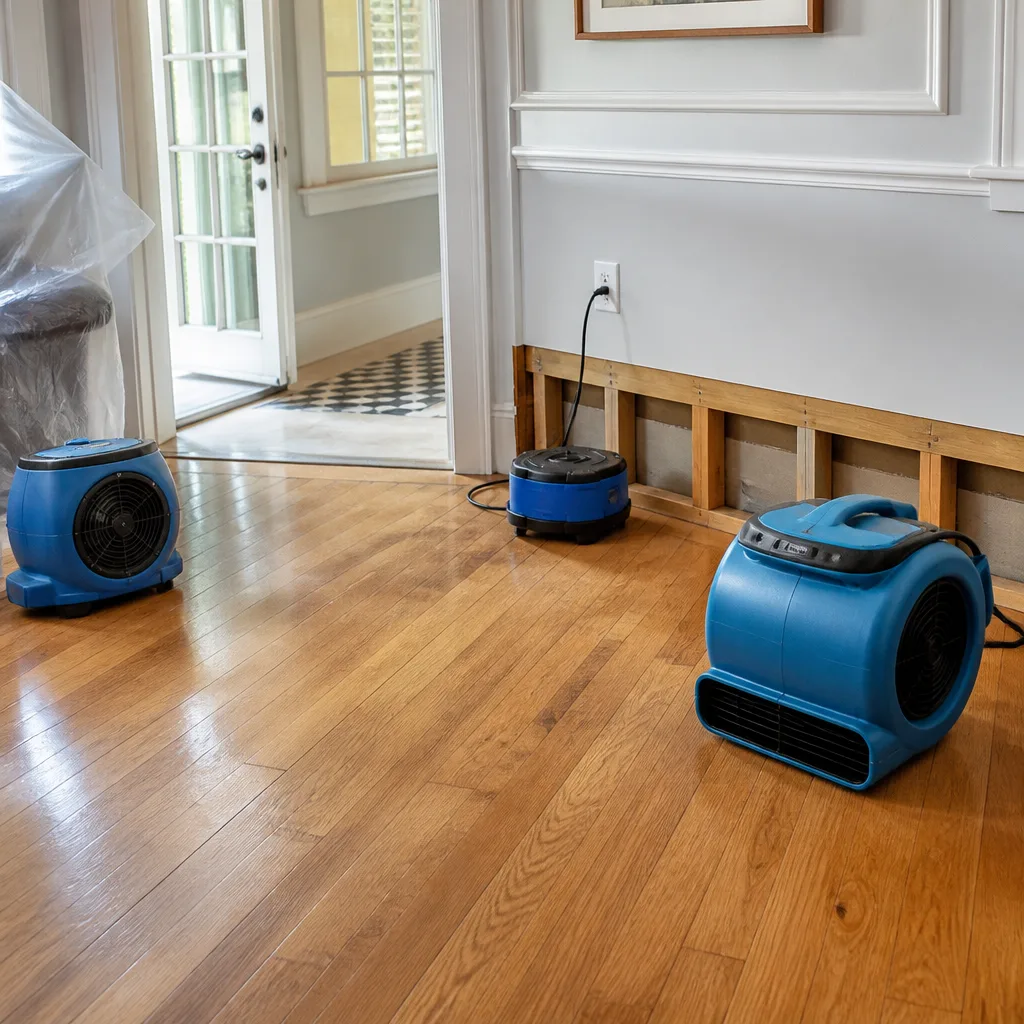 Water damage drying
 Fire & smoke cleanup
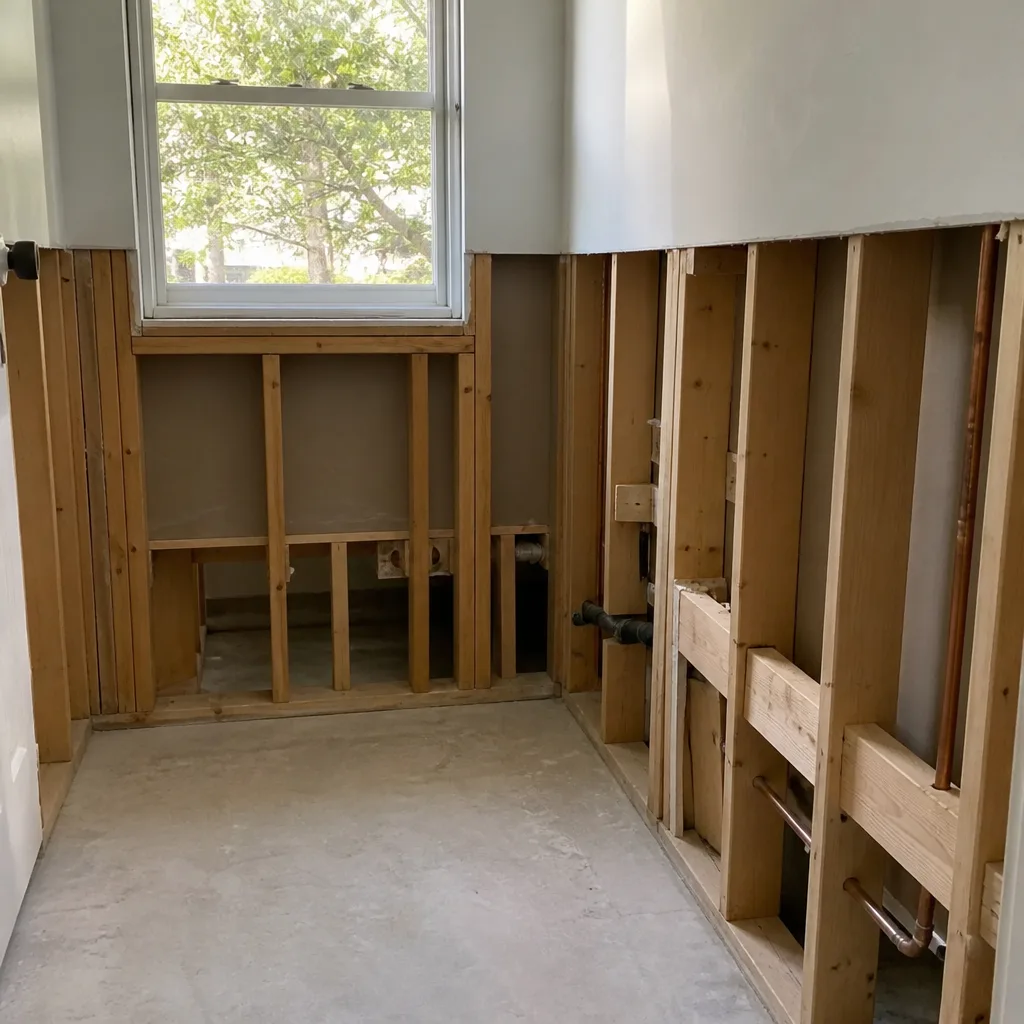 Mold remediation
 Storm response
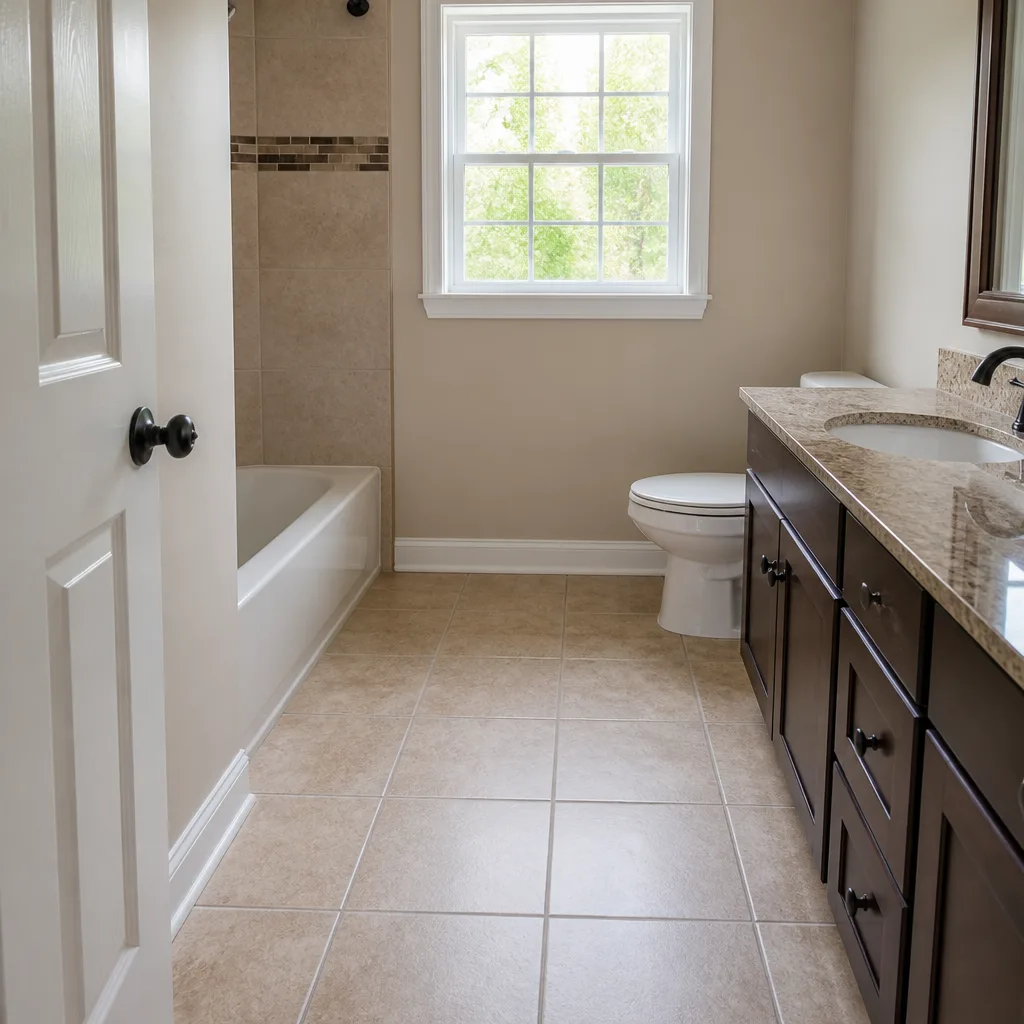 Sewage cleanup
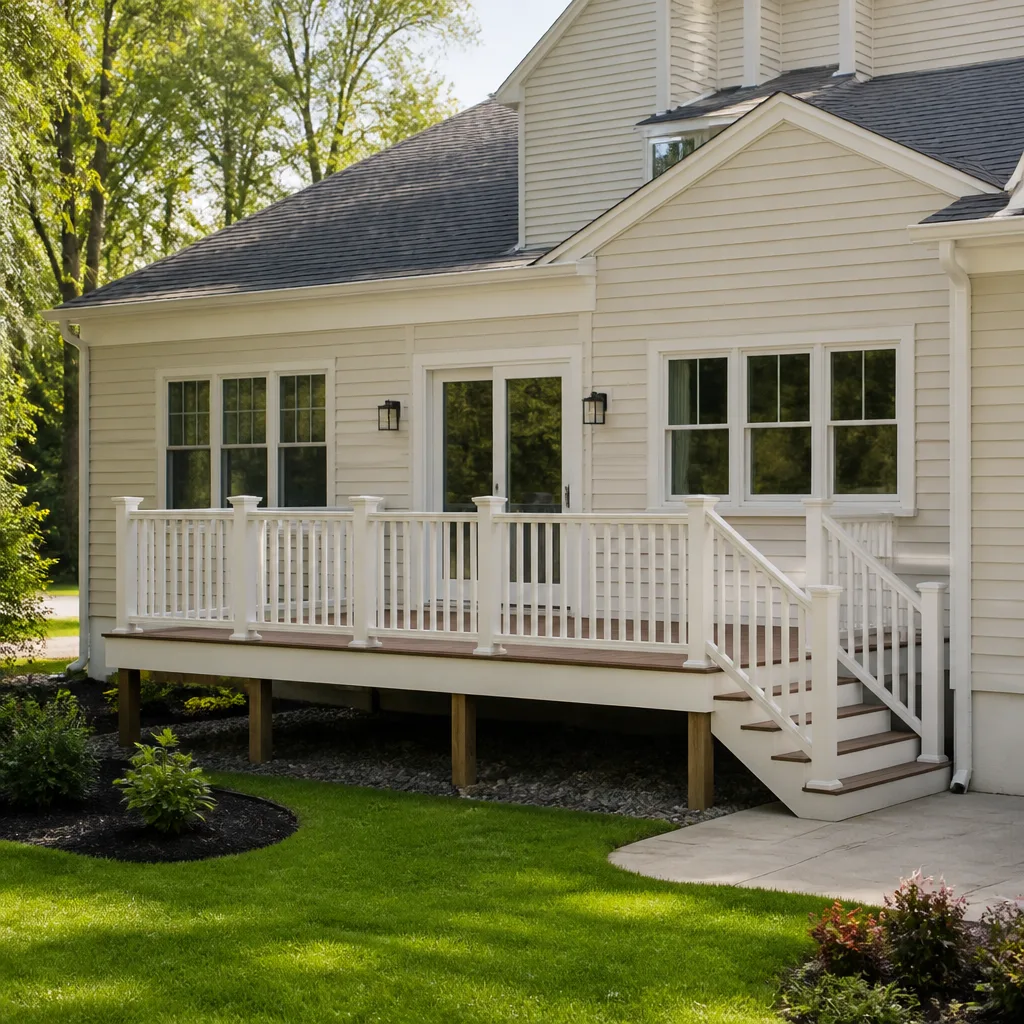 Reconstruction
Free visual inspection and a written scope of work before any mitigation begins - photos, moisture readings, and drying logs go in your claim file
The scope we write is the scope we bill. Anything new gets shown to you, in writing, before we touch it.
Get your free estimateDIY vs Professional Damage Restoration: The Dallas Homeowner’s Decision Guide
A shop vac and three box fans can remove visible water from a flooded room. They cannot reduce the moisture content of a 2×4 wall stud from 40% to the IICRC target of 19% or below, and that gap, invisible to the eye, is where mold grows. This guide draws the line precisely. You’ll learn which Dallas water damage situations you can safely handle yourself, which ones require professional equipment and training, and how to tell the difference before you commit time and money to the wrong path. For how to hire a damage restoration contractor in Dallas, see our step-by-step guide.
Restoration work we handle
Quick Answer
DIY restoration works for small, clean-water spills on hard surfaces caught within two hours. Professional restoration is required when water has soaked into drywall, flooring, subfloor, or wall cavities, because structural drying demands commercial equipment that can pull moisture from building materials down to 19% or below. If the water source is gray or black, or the affected area exceeds roughly 10 square feet, call a Dallas restoration company before touching anything.
Table of Contents
- The Moisture Line: Where DIY Stops and Professional Restoration Begins
- Three Scenarios Where DIY Restoration Is Genuinely Appropriate
- The Hidden Cost of DIY Failure: When $400 Becomes $12,000
- How to Use a Moisture Meter as Your Decision Tool
- Insurance Implications of DIY Restoration in Dallas
- What Professional Equipment Actually Does That Rental Gear Cannot
- Understanding Water Categories: Clean, Gray, and Black
- Common Mistakes to Avoid
- When to Call a Professional
- Frequently Asked Questions
- The Bottom Line
The Moisture Line: Where DIY Stops and Professional Restoration Begins
The line between a DIY cleanup and a professional restoration job is not about effort or willingness. It’s about physics. Water behaves predictably once it leaves a pipe or breaches a foundation. It seeks the lowest point, wicks upward through drywall, saturates wood framing, and settles into every porous material it encounters. What you can see on the surface tells you almost nothing about what’s happening behind the baseboard or under the tile.
Wood framing in a Dallas home typically sits at an equilibrium moisture content between 8% and 12%. After a water event, that number climbs fast. At 20% moisture content, wood begins supporting microbial growth. At 28% and above, structural degradation accelerates and mold becomes an active concern. The IICRC S500 standard, the document that defines professional water damage restoration, sets 19% as the target drying threshold for structural wood. A consumer-grade fan and a dehumidifier from a hardware store cannot reliably pull a wall cavity from 35% down to 19%. They were never designed to.
This is why we tell Dallas homeowners that the real question is not “can I dry this myself?” It’s “where is the water, and how deep did it go?” Surface water on tile, concrete, or sealed hardwood is within DIY reach. Water that has penetrated drywall, soaked into subfloor, or wicked up wall cavities is a structural drying problem requiring commercial equipment and moisture mapping. We’ve been restoring Dallas homes since 2005, and the pattern we see again and again is the same: a homeowner spends a weekend drying what they can see, and three weeks later a musty smell reveals what they couldn’t.
Dallas adds its own variable to this equation, which is why seasonal damage restoration care for Dallas matters. Our summers push outdoor temperatures past 100 degrees with humidity that fluctuates wildly. That heat accelerates evaporation on the surface, making a floor feel dry to the touch while the subfloor underneath remains saturated. A surface that feels dry in a Dallas summer can still carry 30% moisture a half-inch below. The heat is not your friend in DIY restoration; it masks the problem.
Three Scenarios Where DIY Restoration Is Genuinely Appropriate
We’re not here to tell you that every water event needs a professional crew. That would be dishonest, and it would waste your money. There are legitimate DIY situations, and knowing them precisely is what keeps you from either overreacting or underreacting. Here are the three scenarios where a homeowner with basic tools can handle the job completely.
Scenario 1: Clean-Water Spill on a Hard, Non-Porous Surface, Caught Within Two Hours
A dropped pitcher of water on tile. A supply line that leaked onto sealed concrete for twenty minutes before you shut the valve. A pet water bowl tipped onto vinyl plank flooring. These are clean-water events with no time for absorption. Here’s the step-by-step process that defines “done”:
- Stop the source immediately. Shut the valve, unplug the appliance, contain the spill. Minutes matter more than anything else in this scenario.
- Remove standing water with towels or a wet/dry vacuum. Get the surface dry to the touch. Pay attention to edges and corners where water pools.
- Check for any path to porous material. Did water reach a baseboard gap? A floor vent? The edge of a rug? If yes, that area now falls outside DIY territory for that portion of the spill.
- Run a box fan on the area for 4 to 6 hours. Circulation speeds evaporation of any residual surface moisture. Open windows if Dallas humidity is low (typically late fall through early spring).
- Verify dryness with a moisture meter. Hard surfaces should read at or below 12% on a consumer-grade meter. If you don’t own a meter, the section below explains exactly what to buy and what readings mean.
“Done” in this scenario means: the surface reads dry on a meter, no odor develops within 72 hours, and no discoloration or warping appears within two weeks. If any of those three checks fail, you underestimated the scope, and professional drying becomes necessary.
Scenario 2: Exterior Water Intrusion Limited to a Small, Inspectable Area
Dallas thunderstorms push water against foundations and window frames. Sometimes that water finds a gap in caulking or a loose window seal and puddles on an interior sill or a concrete slab. If the intrusion is small (a cup or two of water), the surface is non-porous, and you can see and touch the entire affected area, this is DIY-appropriate. Dry the surface, identify the entry point, reseal it with exterior-grade caulk, and monitor. The key distinction here is the word “inspectable.” If you cannot see where the water went, you cannot confirm it’s dry.
Scenario 3: A Completely Removable, Machine-Washable Item Gets Wet
A bath mat soaked from an overflowing tub. A throw rug that caught water from an open window during a Dallas storm. Items you can pick up, carry outside, and either machine-wash or dry in direct sun with full access to both sides. These are isolated items, not structural materials. Wash in hot water with detergent, dry completely before returning, and the job is done. The moment water travels from that rug into carpet padding or hardwood beneath, the scenario shifts to professional territory.
The Hidden Cost of DIY Failure: When $400 Becomes $12,000
Here is the math that most DIY guides won’t show you. A homeowner in Dallas rents a commercial-style dehumidifier and an air mover from a big-box store for a weekend. Cost: roughly $400 after rental fees, fuel, and the inevitable purchase of a few extra fans. They run the equipment for two days. The drywall feels dry, the carpet feels dry, and the smell is gone. They return the equipment and call it done.
What they cannot see is the moisture still trapped in the wall cavity behind the drywall, in the subfloor under the padding, in the bottom plate of the wall framing where water wicked down from a baseboard gap. A rental dehumidifier pulls moisture from the air in the room. It does not create the directed air pressure or the sealed drying chamber required to pull moisture from inside building materials. That requires an Injectidry system or a desiccant dehumidifier running in a contained space with negative air pressure, equipment that rental counters do not stock because it requires training to operate safely.
Three to six weeks later, the homeowner notices a musty smell. A mold remediation in Dallas inspection reveals Aspergillus or Penicillium growing inside the wall cavity. The drywall must be cut out, the framing treated, the area contained and HEPA-scrubbed. The bill: $4,000 to $12,000 depending on the square footage and the extent of the colony. The professional drying that would have prevented it all would have cost $1,500 to $3,500, and the homeowner’s insurance would likely have covered most of it.
The $400 DIY job didn’t save $400. It cost somewhere between $2,600 and $11,000 more than doing it right the first time. This is not scare tactics. It’s the ledger we see in Dallas homes every month. We’ve walked into homes in Lakewood, in Preston Hollow, in East Dallas where a water heater leaked, a homeowner dried it themselves, and the follow-up mold bill exceeded $10,000. The drying was the cheap part.
How to Use a Moisture Meter as Your Decision Tool
A consumer-grade moisture meter costs between $30 and $80 at any Dallas hardware store. It is the single best decision tool a homeowner can own for water damage situations, and it’s the foundation of any water damage restoration maintenance checklist for Dallas homeowners. Here’s how to use it before you commit to either the DIY path or a professional call.
What to Buy
Look for a pin-type moisture meter. Pinless meters scan surface moisture without penetration, which is useful for quick readings on finished surfaces, but pin-type meters measure deeper and are more accurate for structural materials. If you can afford both, buy both. For $80 total, you have the same basic diagnostic capability that professional crews use for initial assessments.
How to Read It
- 0% to 12% on wood or drywall: Normal, dry conditions. This is the baseline for undamaged materials in a Dallas home.
- 13% to 19% on wood or drywall: Elevated moisture. If you’re in this range after a water event, drying is incomplete. Continue DIY efforts on surface materials only. If readings persist after 48 hours of fan and dehumidifier use, call a professional.
- 20% to 28% on wood or drywall: This is the danger zone. Microbial growth becomes possible at 20%. Structural drying with commercial equipment is required. Do not close up walls or replace flooring in this range.
- Above 28% on wood or drywall: Active water saturation. Mold growth is probable without immediate professional intervention. Call a water damage restoration in Dallas company same day.
Where to Measure
- Measure the visible wet area first. This establishes your baseline extent.
- Measure 12 inches beyond the visible wet edge. Water wicks outward through drywall and subfloor. If readings stay elevated past the visible boundary, the affected area is bigger than it looks.
- Measure baseboards and bottom wall plates. Water runs down walls and settles at the floor line. Insert the pin at an angle into the baseboard gap where possible.
- Measure the subfloor through the flooring. If you have carpet, lift a corner and press pins into the padding and subfloor. For hardwood, check readings at plank edges.
- Measure the same spots daily. Readings should trend downward by 3% to 5% per day under professional drying. Flat or rising readings mean your drying method is not working.
If you take these readings and find anything at 20% or above in structural materials, the decision is made for you. No amount of fan time will fix it. This is the precise line where DIY ends.
Insurance Implications of DIY Restoration in Dallas
Here’s a fact that surprises most Dallas homeowners: your insurance policy likely contains language about your duty to mitigate damage, and it may also contain language about professional documentation. The first part works for you. The second part can work against you if you choose DIY.
Most Texas homeowners policies require the policyholder to take reasonable steps to prevent further damage after a covered loss. That means shutting off the water source, moving furniture, and starting some form of drying. Failure to mitigate can result in a reduced payout for the resulting damage. What many policies also require, buried in the endorsements, is that professional mitigation be performed and documented within a reasonable timeframe. The insurer wants a record that demonstrates the damage was properly addressed, not a homeowner’s word that they “dried it out.”
A DIY restoration attempt creates three specific risks on the insurance side:
- Reduced or denied coverage for secondary damage. If mold appears three weeks after a DIY dry-out, the insurer may classify the mold as a failure-to-mitigate by the homeowner, not a covered peril. The original water damage was covered. The mold that grew because the homeowner’s drying was inadequate is often excluded.
- Complicated future claims. If a water damage claim involves DIY repairs that failed, the adjuster has grounds to question whether the homeowner caused additional damage through improper methods. This shifts the burden of proof onto you, the policyholder.
- Inability to document the loss properly. Insurance payouts depend on documentation. Professional restoration companies provide moisture readings, photo documentation, equipment logs, and drying certificates. A DIY job provides none of that. When the adjuster asks for proof that the home was properly dried, you have nothing.
The smart play in Dallas is to call your insurer immediately after any water event, then call a professional restoration company for an assessment. Our team works directly with adjusters, handles photo documentation throughout the job, and produces the drying records that insurance companies expect to see. That documentation is often the difference between a smooth claim and a contested one. Since 2005, we’ve handled thousands of Dallas insurance claims, and the homeowners who struggle most are always the ones who tried to go it alone first.
What Professional Equipment Actually Does That Rental Gear Cannot
The difference between professional restoration and DIY is not the effort level. It’s the equipment, and more importantly, the knowledge of how to use that equipment in a coordinated system. Here’s what actually happens on a professional water damage restoration in Dallas job versus a rental fan setup.
Commercial Dehumidifiers: Refrigerant vs. Desiccant
A hardware store rental dehumidifier is a refrigerant unit. It cools air to condense moisture out of it. It works reasonably well in warm, humid conditions. What it cannot do is pull moisture from materials in a cold environment or reach the low humidity levels required for final drying. Professional restoration companies use refrigerant units from Dri-Eaz and Phoenix for most jobs, but they also deploy desiccant dehumidifiers, which use a chemical drying wheel to extract moisture at a molecular level. Desiccant units achieve the very low grain counts (a measure of air moisture density) that force water out of wood and drywall. They’re expensive. They’re not rentable. They’re essential for structural drying.
Directed Air Movement vs. Room Fans
A box fan moves air around a room. It does not create the focused, laminar airflow required to dry wall cavities and under cabinets. Professional air movers from XPOWER and B-Air are designed to be aimed at specific surfaces at specific angles, creating a continuous stream of dry air across wet materials. On a professional job, the crew calculates how many air movers are needed per square foot, positions them to create a circular airflow pattern, and adjusts the setup daily as moisture readings change. This is called psychrometric drying, which means measuring the moisture in the air and the materials, then adjusting equipment to force the moisture out of the structure efficiently.
Injection and Extraction Systems for Cavities
When water is inside a wall cavity or under a floor, nothing you can place in the room will dry it effectively. That’s where Injectidry systems come in. These are panels and hoses that inject dry air directly into wall cavities, behind cabinets, under subfloors, into the spaces where water actually is. A homeowner cannot rent this equipment. It requires training to set up correctly without damaging finishes. Without it, sealed cavities simply do not dry, and whatever is inside them stays wet for weeks or months.
Moisture Mapping and Daily Documentation
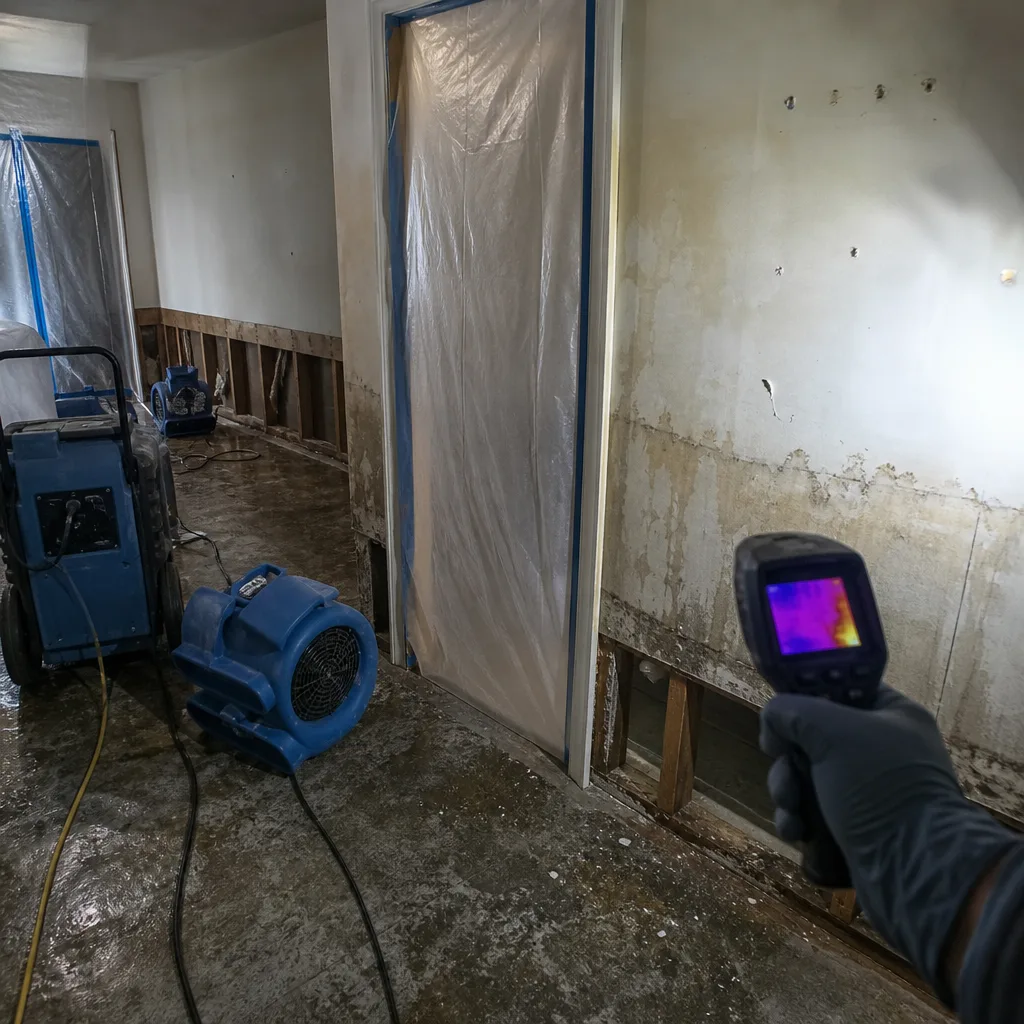
Professional crews do not guess where the water went. We map it, using pin meters and infrared cameras that show temperature differences indicating hidden moisture. We record baseline readings, we track drying progress daily, and we adjust the equipment layout based on the numbers. When the job is done, we produce a drying certificate with final moisture readings at or below the IICRC target of 19% for structural wood. This is the documentation your insurance company wants, and it’s the proof that the job was actually completed, not just that the floor felt dry.
Understanding Water Categories: Clean, Gray, and Black
The single biggest mistake DIY homeowners make is treating all water the same. The restoration industry categorizes water into three classes, and the category determines everything about safety, approach, and whether you should even be in the room. Here’s the plain-English version.
Category 1: Clean Water
Water from a broken supply line, a faucet left running, a tub overflow of clean water, or a Dallas rainstorm that enters through a window without contact with soil. Clean water has no significant contaminants. It’s the only water category where DIY restoration is appropriate, and only in the limited scenarios described earlier. Note: clean water becomes gray water in 48 to 72 hours if left standing, as it picks up contaminants from building materials and bacteria begins to multiply.
Category 2: Gray Water
Water that contains significant biological, chemical, or physical contamination. Dishwasher overflow, washing machine discharge, toilet overflow with urine but no feces, water from a waterbed, or clean water that has sat for more than 72 hours. Gray water can cause illness if ingested and carries a meaningful microbial load. DIY cleanup of gray water should be limited to removing contaminated materials. Structural drying and disinfecting should be left to professionals with the proper PPE and antimicrobial treatments.
Category 3: Black Water
Water that is grossly contaminated. Sewage backup, flood water from a rising creek or drainage swale, toilet overflow with feces, or any water from outside that has been in contact with soil and organic matter. Black water contains pathogenic organisms, fecal matter, and chemical contaminants. You should not be doing DIY work in black water. This is a full professional storm damage restoration in Dallas situation with full PPE, containment, and protocol for disposing of contaminated materials. Call a professional and stay out of the affected area until the assessment is complete.
The category of water, the length of exposure, and the materials affected together determine whether any part of the job is DIY-appropriate. If you’re ever unsure about the category, treat the water as one category worse than your best guess and act accordingly. The cost of overreacting is much lower than the cost of underreacting.
Common Mistakes to Avoid
- Treating visible dryness as actual dryness. In Dallas summers especially, surfaces dry fast while the material underneath stays saturated. Use a moisture meter. If the number is above 19% in structural material, it is not dry. Period.
- Wall-to-wall carpet over concrete slab: ignoring the padding. Water runs through carpet and soaks the padding and the slab beneath. Drying the carpet surface does nothing for the pad. The carpet must be lifted, the pad assessed, and the slab dried. This is professional work.
- Closing up walls and replacing flooring before verifying dryness. This is how mold farms are created. Sealed-in moisture has nowhere to go except into whatever you just installed. Verify with a meter first. Always.
- Using household fans and a window AC unit as a drying system. These move air and cool it. They do not remove moisture from building materials. They create the illusion of drying while the structure stays wet.
- Delaying the call because “it’s just a small leak.” Small leaks that run for days or weeks inside a wall are often worse than a burst pipe that floods a room visibly. Slow leaks saturate framing and feed mold growth unseen for weeks. If you smell mustiness and can’t find the source, call before the colony spreads.
- Not shutting off the water source immediately. In the chaos of a leak, homeowners sometimes move furniture first and shut off the valve second. Every minute of flowing water adds gallons and square footage of saturation. Know where your main shutoff is before you need it. Every Dallas homeowner should be able to shut off their water in under three minutes.
- Assuming insurance will cover DIY-related mold. As detailed above, secondary damage from inadequate DIY drying is frequently excluded from coverage. The safest financial move is professional mitigation with documentation.
When to Call a Professional
Call a professional restoration company when any of these conditions apply: water has touched drywall or insulation; water has soaked into hardwood, laminate, or carpet over a subfloor; the water is gray or black category; the affected area is larger than roughly 10 square feet; you smell mustiness or see discoloration days or weeks after a water event; your moisture meter reads 20% or higher in any structural material after 48 hours of DIY drying; or insurance is likely to be involved and you need documentation. In any of these situations, Marsh Water Damage Dallas is a better path than another weekend of rented fans. Our team has handled water, mold, and storm damage in Dallas since 2005, and we offer free assessments with a written scope and price before any work begins. Call (432) 529-4284 and a live person answers, 24 hours a day, every day of the year.
Frequently Asked Questions
Most residential water extractions in Dallas run between $1,500 and $3,500 for a single-room event involving clean water, with structural drying and equipment included. Larger multi-room events or gray water jobs typically range from $3,500 to $8,000. Black water sewage jobs often exceed $8,000 due to containment, disposal, and sanitization requirements. These are working ranges, not quotes. Every job is different, and the only way to get an accurate number is an on-site assessment. Call (432) 529-4284 for a free estimate with a written price before any work starts.
You can dry out small clean-water spills on hard surfaces caught within two hours, using towels, a wet/dry vacuum, and box fans, provided the water has not reached drywall, subfloor, or wall cavities. Anything beyond that requires commercial drying equipment and moisture mapping. The line is not about effort. It’s about depth and material type. If water has soaked into porous building materials, professional drying is the only method that actually works.
Marsh Water Damage Dallas answers every call with a live person, 24/7, including holidays, and we dispatch same-day for water emergencies in Dallas. We do not use voicemail, callback queues, or answering services. You speak with a person, provide your address, and a team is scheduled. In most Dallas neighborhoods, we arrive within 60 to 90 minutes of the call.
Most Texas homeowners policies cover sudden and accidental water damage from sources like burst pipes, supply line failures, and storm intrusion, subject to your deductible and coverage limits. Gradual leaks, maintenance-related failures, and flood damage (from rising external water) are typically excluded. Professional restoration with photo documentation and drying records strengthens your claim. Our team coordinates directly with adjusters throughout the process in Dallas.
Most residential drying jobs in Dallas take three to five days from equipment placement to final moisture readings at or below 19%. Larger jobs or jobs involving hardwood floors or multiple rooms can run seven to ten days. The drying period ends when the moisture meter says it ends, not on a calendar schedule. We provide daily readings and adjust equipment until the numbers are right. Call (432) 529-4284 for an assessment tailored to your specific situation.
If water has been standing for more than 48 hours, or if visible mold growth appears on drywall, baseboards, or flooring, cleaning surfaces is not enough. Mold sends roots into porous materials, and surface cleaning removes only the visible portion. Full remediation involves containment, removal of affected materials, treatment of framing, and air scrubbing to remove spores. If you’re seeing or smelling mold in Dallas, call (432) 529-4284 for a professional assessment. The answer is usually more involved than a cleaning.
The Bottom Line
The DIY versus professional decision for Dallas water damage comes down to a number: 19%. That’s the moisture content target for structural wood, and it’s the number consumer equipment cannot reliably reach. Small clean spills on hard surfaces, caught fast, are DIY-appropriate. Everything else, especially anything involving drywall, subfloor, wall cavities, or gray or black water, belongs in professional hands. The $400 you might save with rental equipment can turn into a $12,000 mold remediation bill in six weeks. Marsh Water Damage Dallas has served Dallas since 2005 with professional equipment, IICRC-certified technicians, and a written price before every job. Call (432) 529-4284 for a free estimate, and we’ll tell you honestly whether you need us or can handle it yourself. You can also explore more guides & resources on our blog.
Written by Tobias Reyner, Owner at Marsh Water Damage Dallas, serving Dallas since 2005.
See the difference
 Before
 After
After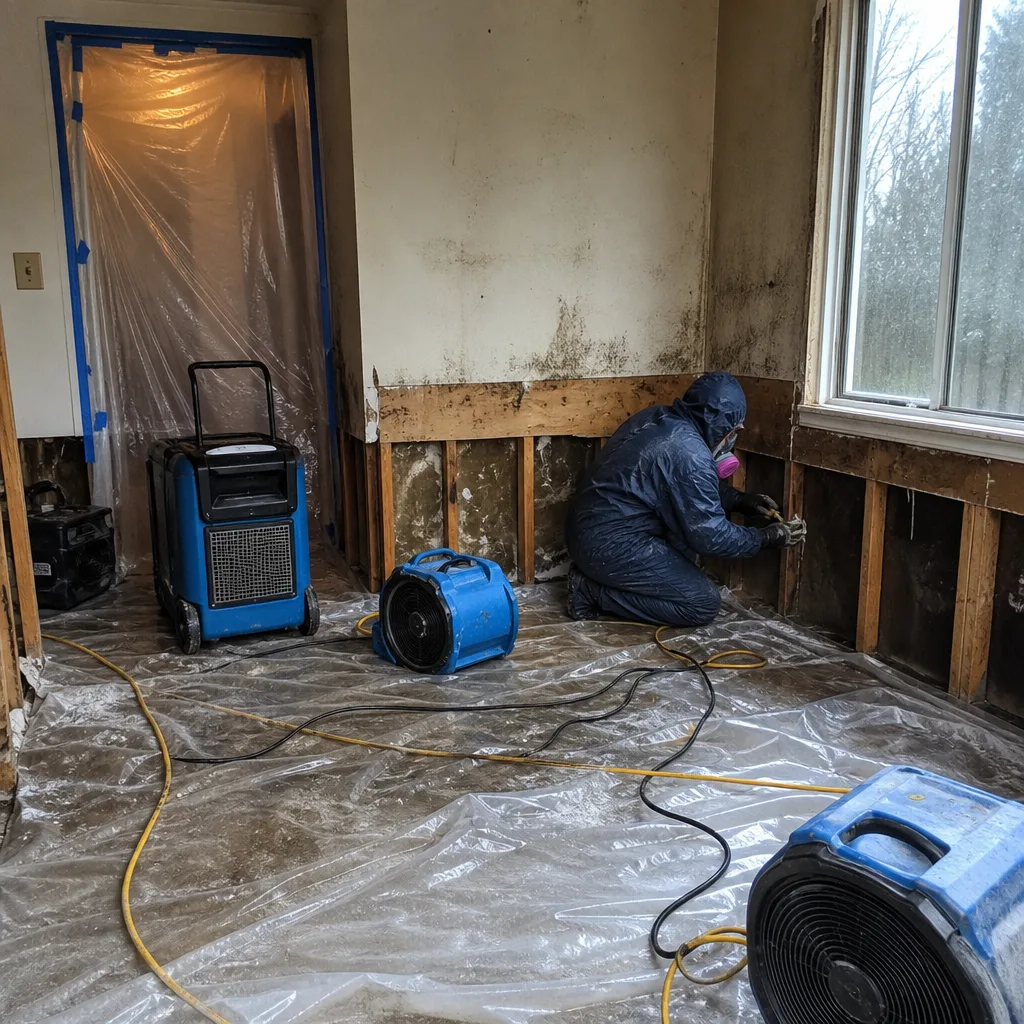 Before
 After
After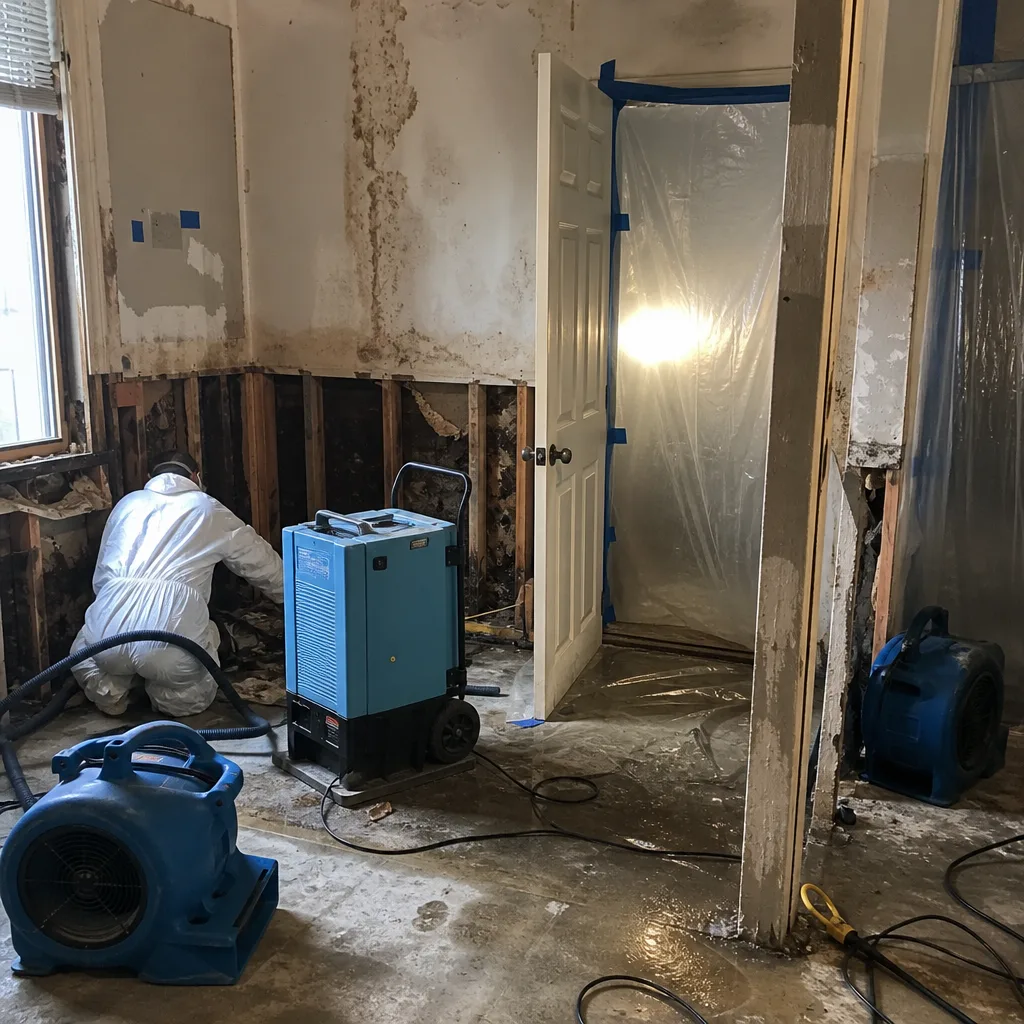 Before
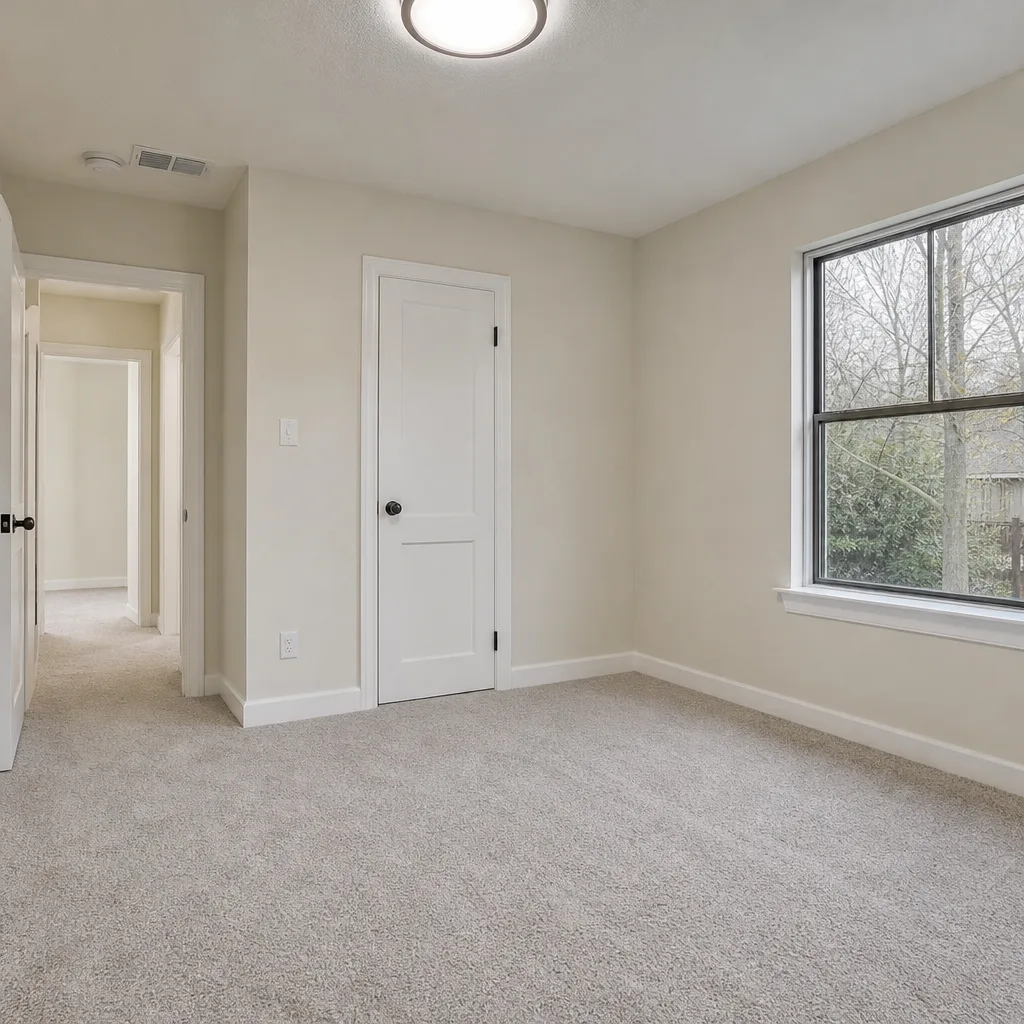 After
After