
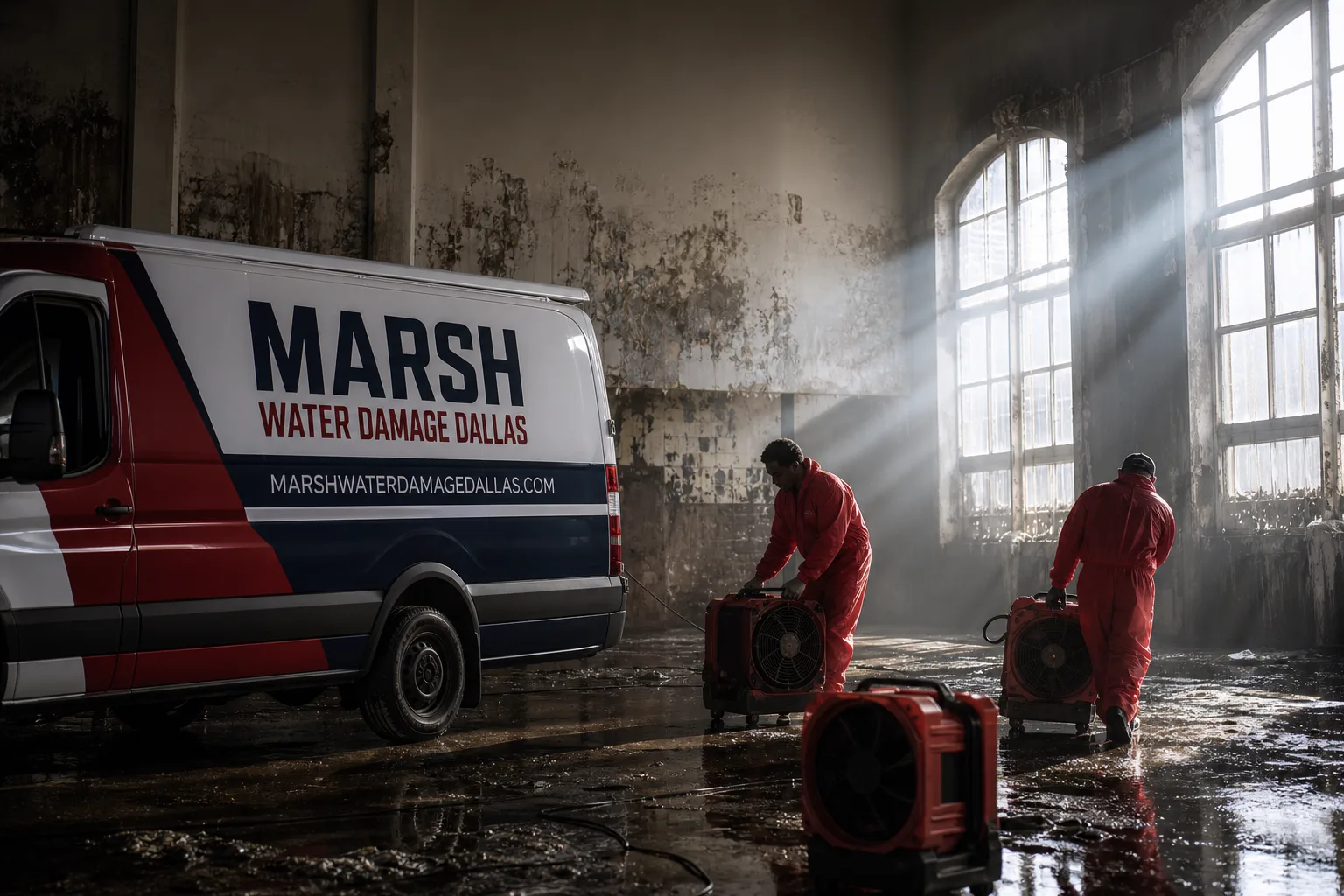
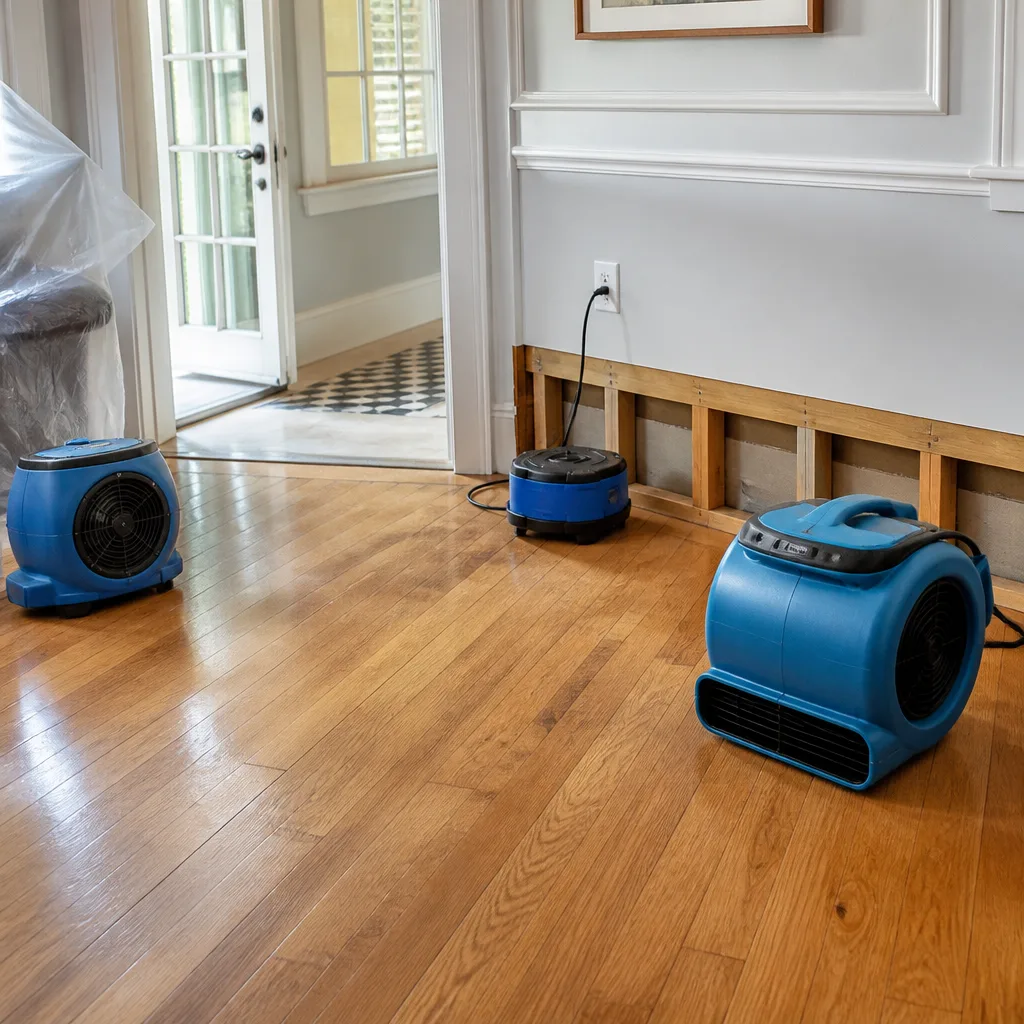
 Water damage drying
 Fire & smoke cleanup
 Mold remediation
 Storm response
 Sewage cleanup
 Reconstruction
Free visual inspection and a written scope of work before any mitigation begins - photos, moisture readings, and drying logs go in your claim file
The scope we write is the scope we bill. Anything new gets shown to you, in writing, before we touch it.
Get your free estimateFast, Reliable Water Damage Restoration Across Seagoville
Water damage in Seagoville rarely announces itself. It seeps through slab cracks, pools under carpet tack strips, and saturates drywall before you ever see a puddle. When you do find it, you need a crew that understands why Seagoville homes leak the way they do, and who can get to you fast. Marsh Water Damage Dallas serves Seagoville with professional extraction, structural drying, and a written price before any work starts. Call (432) 529-4284 any hour, any day. A live person answers.
This page is built around one local truth: Seagoville’s expansive clay soil moves. That movement cracks slabs. Those cracks become water highways. If your restoration crew doesn’t look at the soil, they’re treating the symptom and leaving the cause to strike again. We look at both.
Why Marsh Water Damage Dallas Is Seagoville’s Preferred Water Damage Restoration Company
Seagoville homeowners tell us the same thing over and over: they want to know who’s walking through the door. That’s why every Marsh technician is background-checked, identity-verified, and sent to you by name and photo before the visit. The tech then shows a photo ID badge at your door, every single time. We call it the Threshold Verified standard, and it’s not a marketing phrase. It’s a printed checklist on every work order, and it covers five steps: verified identity, background check, uniform, photo badge, and a written scope of work agreed before we touch a tool.
We’ve been restoring water damage since 2005 as part of the Threshold Group family of restoration companies. The crews dispatched to Seagoville carry IICRC, RIA, and IFA credentials, and they run equipment from Dri-Eaz, Phoenix, XPOWER, B-Air, and Injectidry. That’s the same commercial-grade drying gear used on large loss jobs, applied to a 1970s ranch on a Seagoville acreage. Response time to Seagoville is measured in hours, not days, because our scheduling is coordinated from the Dallas-Fort Worth office and crews are staged to serve the city directly.
Tobias Reyner, who leads Marsh Water Damage Dallas, insists on one thing above all: a written guarantee on every repair. Not a verbal promise. A printed 365-Day Done Right Promise. If the repair fails within a full year, we come back and make it right. The second visit is free. It’s automatic, not something you have to argue for.
Restoration work we handle
Flooded Basement in Seagoville
A flooded basement in Seagoville is almost always tied to the water table and the clay. After heavy rain or a burst pipe, water collects against the foundation and finds its way through cracks, cove joints, or older sump failures. Most flooded basement jobs here involve category 2 water (contaminated with soil or household chemicals) or category 3 water (sewage or outside flood water), and the cleanup is not a mop-and-fan situation. You need extraction, antimicrobial treatment, and structural drying before any rebuild talk starts.
What does a flooded basement job cost in Seagoville? For a typical 800 to 1,200 square foot basement, extraction and drying equipment runs between $2,200 and $4,800. If sewage is involved, disposal and sanitization add another $800 to $1,500. Every Marsh job starts with a written price before we start pulling water out, so you’ll know the number before the equipment comes off the truck.
Slab Leak-Driven Basement Flooding
On Seagoville acreage properties, basement flooding often traces back to a slab leak in the main house, not the basement itself. Water travels under the slab, follows the clay seams, and surfaces in the lowest point of the structure. We map the moisture first, then extract. You can’t dry what you haven’t found.
Post-Storm Basement Intrusion
Severe thunderstorms moving through Dallas County push water into basements through window wells and stair drains. The hot, humid summers that follow create a secondary risk: mold. Our containment and drying protocol addresses both the standing water and the humidity that lingers in Seagoville’s clay-heavy air.
Water Extraction in Seagoville
Water extraction in Seagoville means pulling standing water from concrete slabs, carpet, pad, and the porous materials under them. It’s the first and most urgent step. Every hour water sits on a slab, it wicks farther into the structure. On the expansive clay east of Highway 175, standing water also increases the soil’s moisture content, which causes further swelling and more slab stress. Extraction is not just about removing what you can see. It’s about stopping the water from creating more problems underground.
For a Seagoville home, most residential water extractions run between $1,500 and $3,800 before drying equipment is set. That covers truck-mounted or portable extraction, disposal, and the setup of air movers and dehumidifiers. If the water has reached category 3 contamination, add $500 to $1,200 for sanitization and removal of saturated porous materials.
Concrete Slab Moisture Mapping
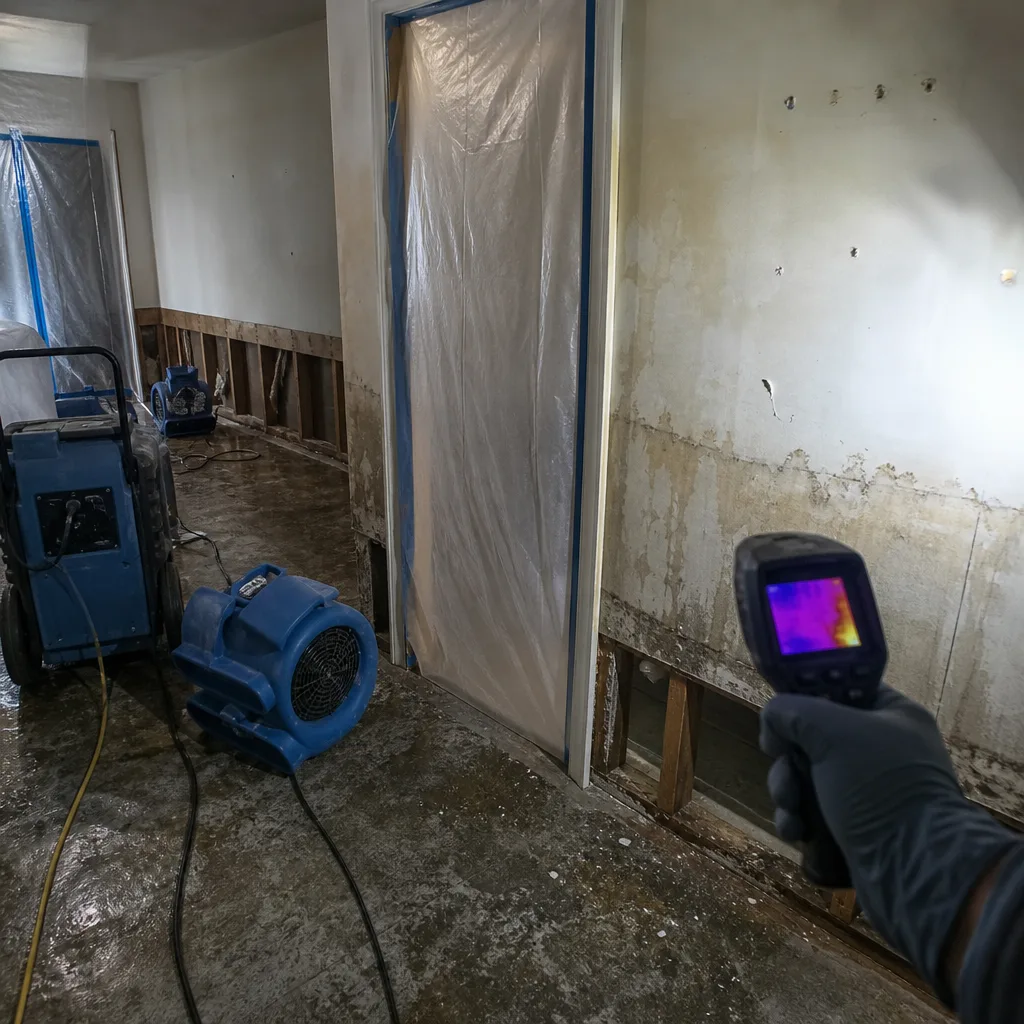
Before we drill or open anything, we take psychrometric readings (measuring the moisture in the air) and infrared moisture mapping across the concrete. That tells us where the water actually went. On Seagoville slab homes, water often travels 20 to 40 feet from the original leak point before you ever see damage. Mapping prevents us from tearing out flooring that’s still dry.
Whole-Home Extraction on Acreage Properties
Long service drives and detached workshops on Seagoville acreage properties create a real problem: distant power sources. Underspec’d drying equipment can’t maintain the airflow needed, and hidden mold follows. We stage portable generators and run heavy-gauge cords to power enough air movers to cover every affected room. One trip, done right.
Trusted Brands We Service in Seagoville
We stock parts and equipment for the brands Seagoville homeowners and contractors already trust. That includes drying and extraction gear from B-Air and Injectidry, plus the full Dri-Eaz and Phoenix lines our techs run daily. Having these units staged locally means faster turnaround when you’re facing a burst pipe at 2 a.m. or a storm-driven flood on a Saturday. Our Water Damage Restoration team carries the same equipment on every Seagoville dispatch, along with IICRC and RIA credentialed operators who know how to use it on slab construction. Fast turnaround matters, but so does getting the first drying attempt right. That’s the whole point.
See the difference
 Before
 After
After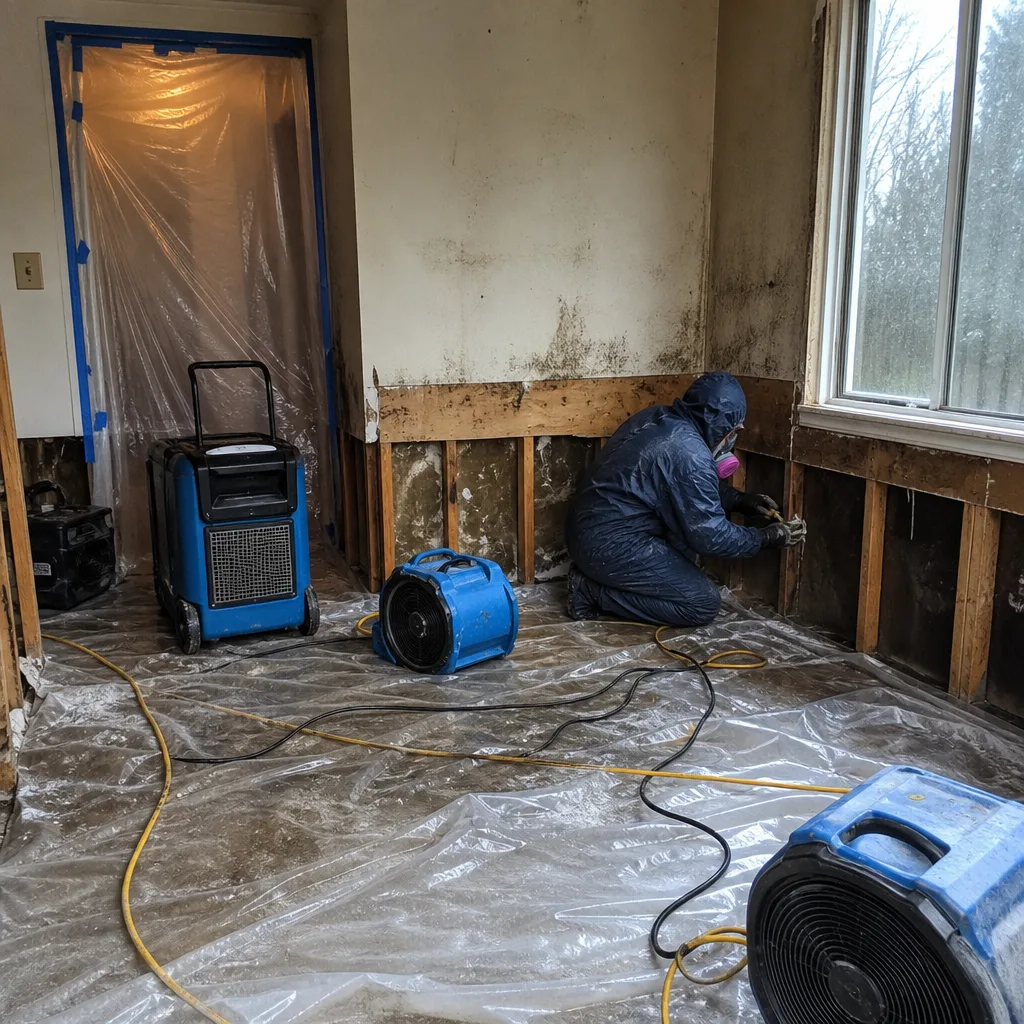 Before
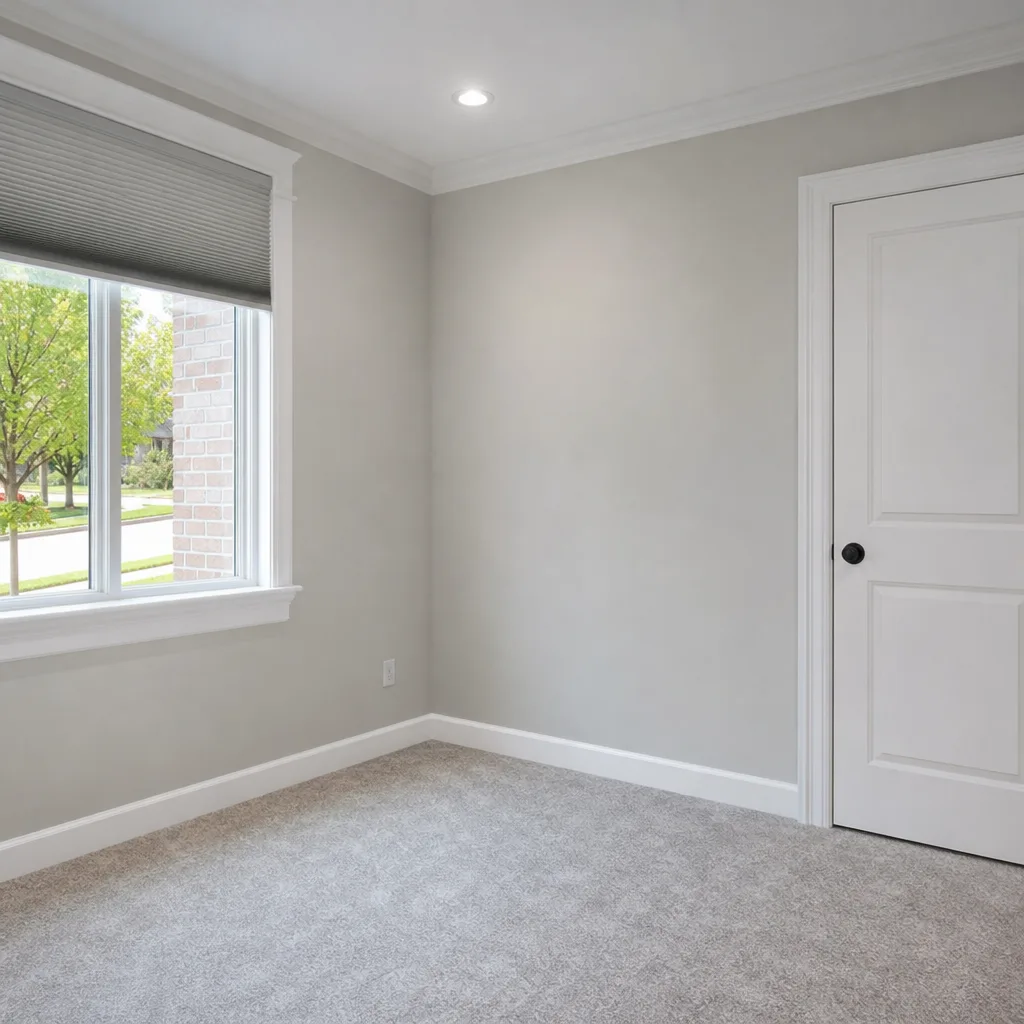 After
After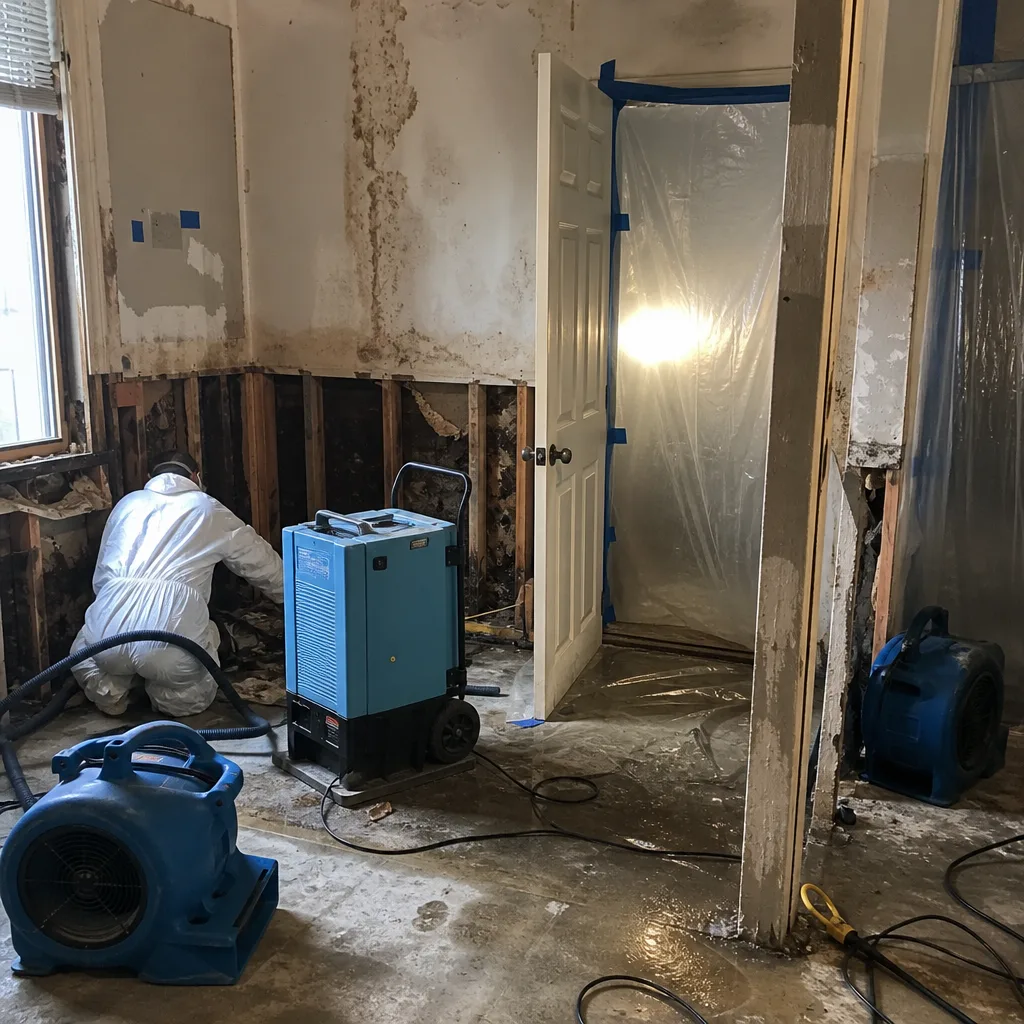 Before
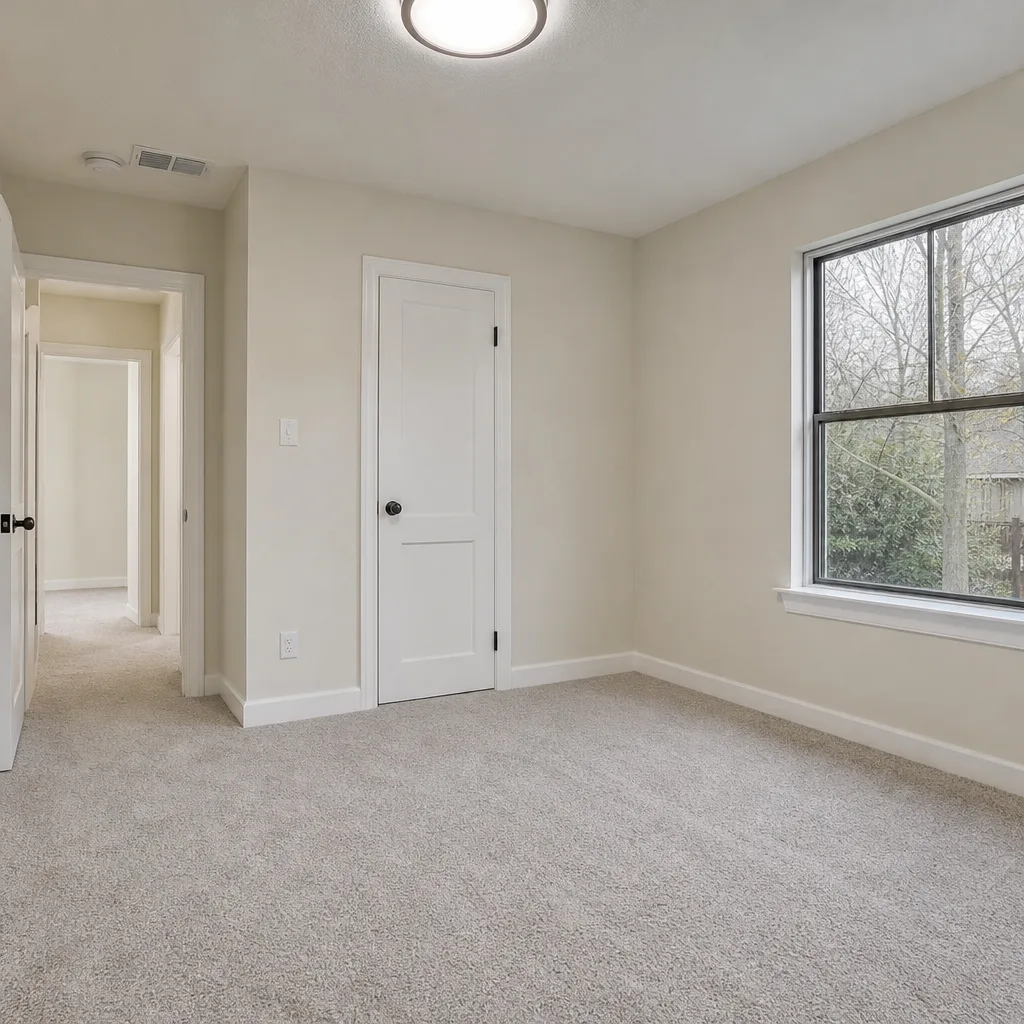 After
AfterCommon Water Damage Restoration Problems We See in Seagoville Homes
- Hidden slab leaks that only show up as floor damage. Because most Seagoville homes are built slab-on-grade, water migrates under the concrete until it buckles tile or rots carpet tack strips. By the time you see a stain, the leak has often been active for weeks.
- Clay soil expansion driving recurring leaks. Homes east of Highway 175 sit on expansive clay that shrinks during droughts and swells after rain. That movement opens foundation cracks, and every wet-dry cycle reopens the same water entry points.
- Cast iron drain lines at end of life. The mid-century ranches in Seagoville were plumbed with cast iron under the slab. After 50 to 60 years, those lines crack and separate. The result is category 2 water pooling under your floors without a visible source.
- Insufficient drying on acreage lots. Long runs from the house to a workshop or outbuilding mean power becomes a constraint. Without enough air movers, moisture stays in the structure, and humidity-driven mold appears weeks later, especially after Seagoville’s hot humid summers.
Pricing for Water Damage Restoration in Seagoville, TX
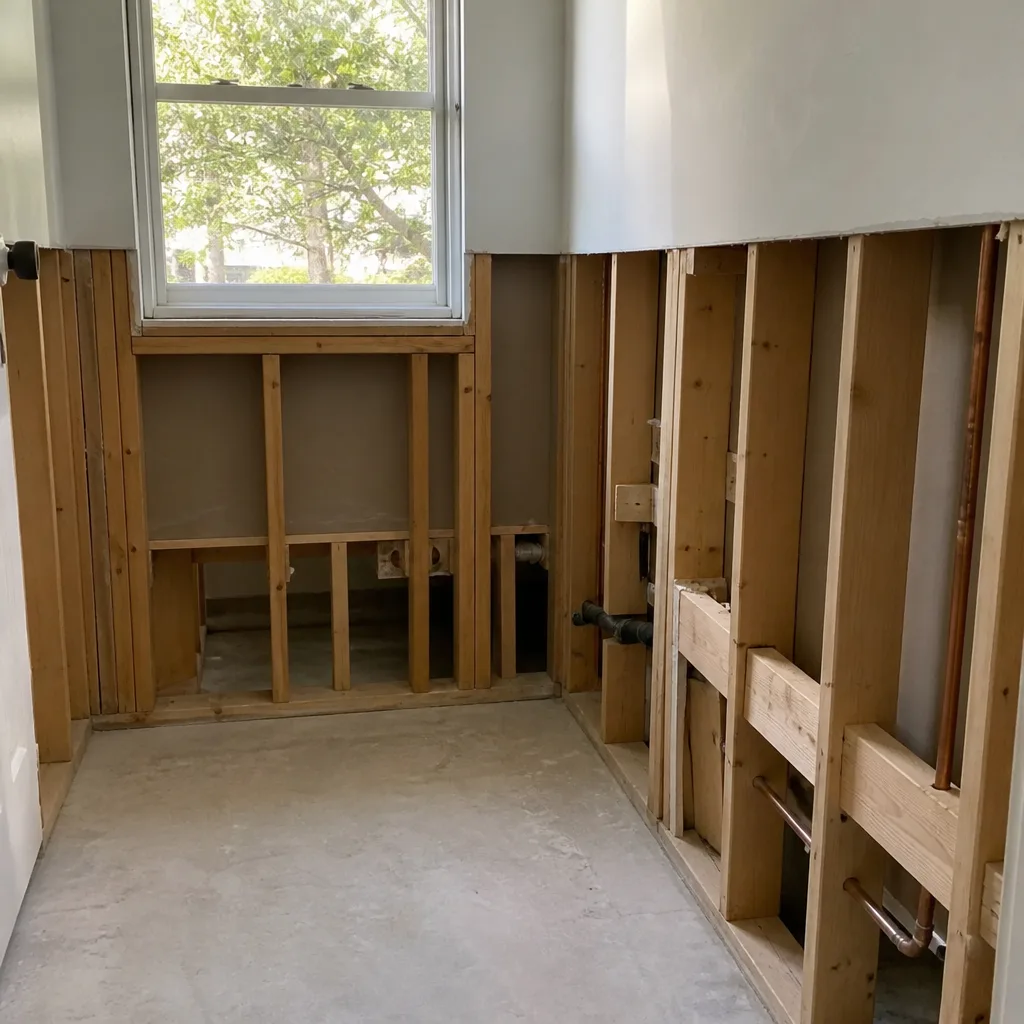
Real numbers for Seagoville’s market: a typical emergency water extraction runs $1,500 to $3,800, and a flooded basement with full drying equipment lands between $2,200 and $4,800. A burst pipe inside a wall or ceiling adds $400 to $900 for drywall and insulation removal so drying can reach the cavity. If the job involves category 3 sewage water, expect $800 to $1,500 in additional sanitization and disposal costs. The biggest factor in Seagoville is whether the leak traces to a slab line, because hitting clay soil means additional moisture mapping and, in some cases, slab drilling at the low point. Every Marsh job includes a written price before work starts. Call (432) 529-4284 for a free estimate, and we’ll give you the number in writing before any equipment comes off the truck.
We Also Serve Cities Near Seagoville
Our crews respond to Water Damage Restoration in Seagoville and the surrounding communities, including Balch Springs, Sunnyvale, Irving, and Dallas. If you’re on the edge of Seagoville or just outside city limits, call (432) 529-4284 and we’ll confirm coverage. Same written price, same Threshold Verified standard, same 365-Day Done Right Promise.
Serving Seagoville, TX - Our Local Coverage Area
We’re based in the Seagoville area and know this community well. Use the map below to see our service coverage - if you’re nearby, we can almost certainly help.
FAQs About Water Damage Restoration in Seagoville
Expansive clay soil absorbs water and swells, then shrinks as it dries. Over repeated drought and rain cycles, that movement stresses the concrete slab until hairline cracks form. Water from a broken supply line or heavy rain then travels through those cracks directly under your flooring. In Seagoville, many homes east of Highway 175 sit on this type of clay, which is why we check for soil movement as a root cause on every water damage call. If you’re seeing water stains in the same spot after every storm, the soil is likely the culprit, not the pipe. Call (432) 529-4284 and our IICRC credentialed techs will map the moisture and find the true source before any drying starts.
Yes, and Seagoville’s hot, humid summers make the window for mold growth shorter than in drier parts of Texas. Mold can begin forming within 24 to 48 hours on wet drywall, carpet pad, and wood, especially when outdoor humidity stays above 60 percent for days at a time. If water sat for more than a day or you smell mustiness, treat it as a mold risk, not a drying job. Our drying protocol includes antimicrobial application on category 2 and category 3 water losses, and we run dehumidifiers until psychrometric readings confirm the structure is genuinely dry. A free assessment on the phone at (432) 529-4284 will tell you whether you’re facing a dry-out or a remediation.
Category 2 water is contaminated with soil, household chemicals, or biological material, and it’s what you get when a cast iron drain line cracks under the slab or a washing machine overflow spreads across a utility room floor. It requires antimicrobial treatment after extraction. Category 3 water is grossly contaminated, typically sewage from a main line backup or outside flood water carrying agricultural runoff, and it demands full removal of saturated porous materials plus sanitization. In Seagoville, cast iron drain failures under mid-century slabs are the most common source of category 2 water we deal with week to week. Call (432) 529-4284 and we’ll classify the water source in writing before work begins.
Larger structures, longer distances between the affected area and a reliable power source, and multiple buildings all add complexity. A detached workshop with its own slab and drain line needs separate extraction and drying, not just an extension cord run from the house. On Seagoville acreage properties, we often stage portable generators and run additional dehumidifier circuits to get enough air movement across every affected room. Skipping that step leaves moisture behind, and moisture becomes mold. Call (432) 529-4284 and we’ll give you a timeline based on your actual floor plan, not a generic estimate.
Yes. We use infrared moisture mapping and psychrometric readings to trace where the water has actually traveled under the concrete. That lets us target the leak point and drill only at the low point where water is pooling, instead of opening the entire slab. Last spring, we responded to a 1970s brick-veneer ranch off Malloy Bridge Road where a cast iron drain line under the slab had finally given way. Our techs ran moisture mapping across the concrete floor and found a 40-foot-long plume of category 2 water wicking into the hallway and guest bedroom. We set up a Phoenix dehumidifier and B-Air air movers inside full containment, then drilled the slab at the low point to remove standing water before structural drying. The homeowner was back to pre-loss condition in four days without replacing a single tile. Call (432) 529-4284 and we’ll do the same mapping at your place before any hammer touches concrete.
Written by Tobias Reyner, Owner at Marsh Water Damage Dallas, serving Seagoville and surrounding Dallas County communities since 2005.