

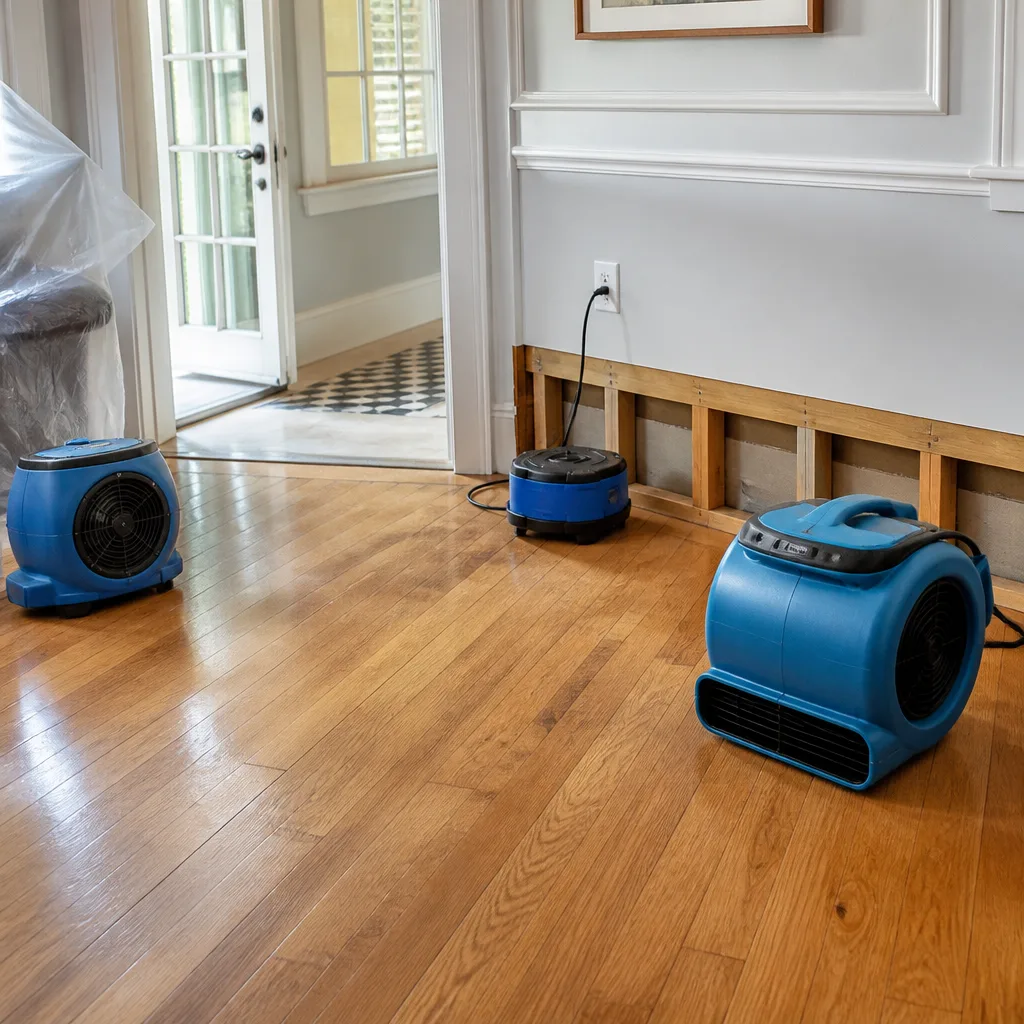
 Water damage drying
 Fire & smoke cleanup
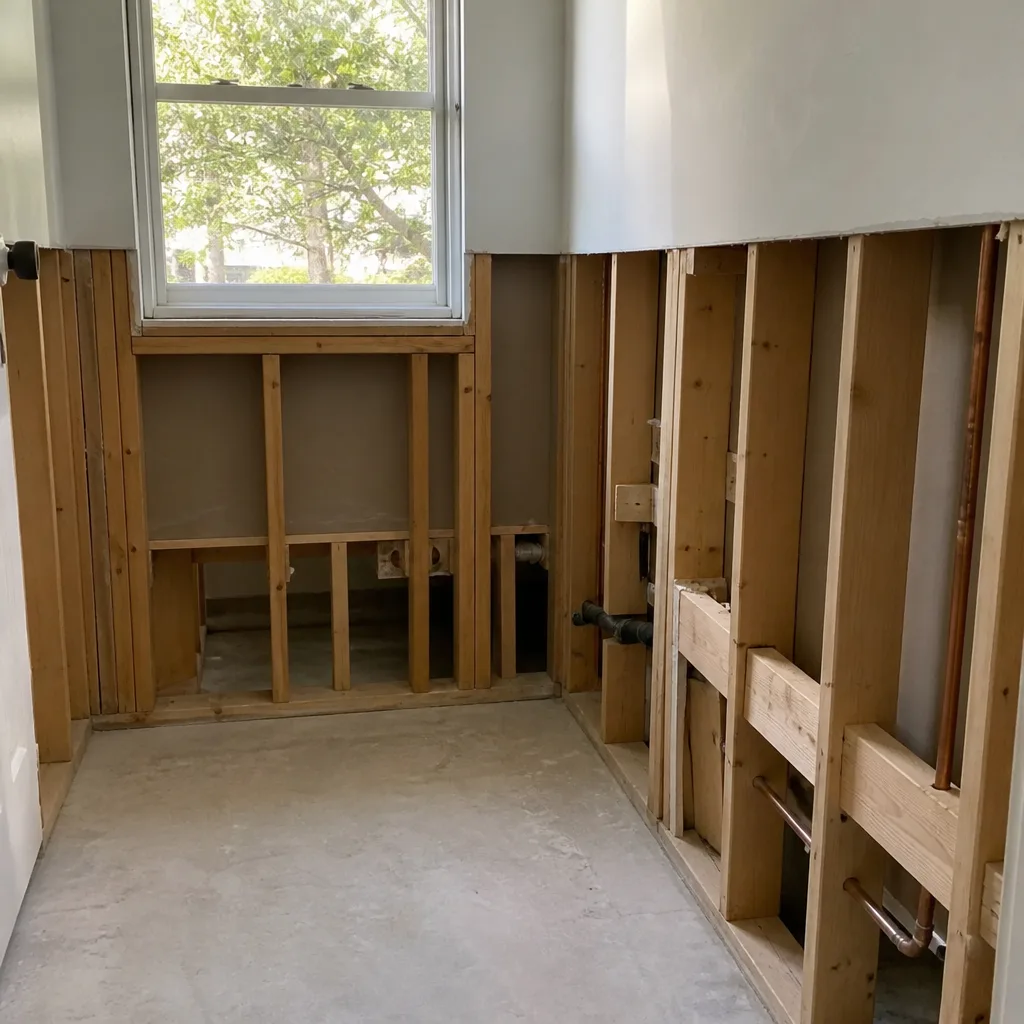 Mold remediation
 Storm response
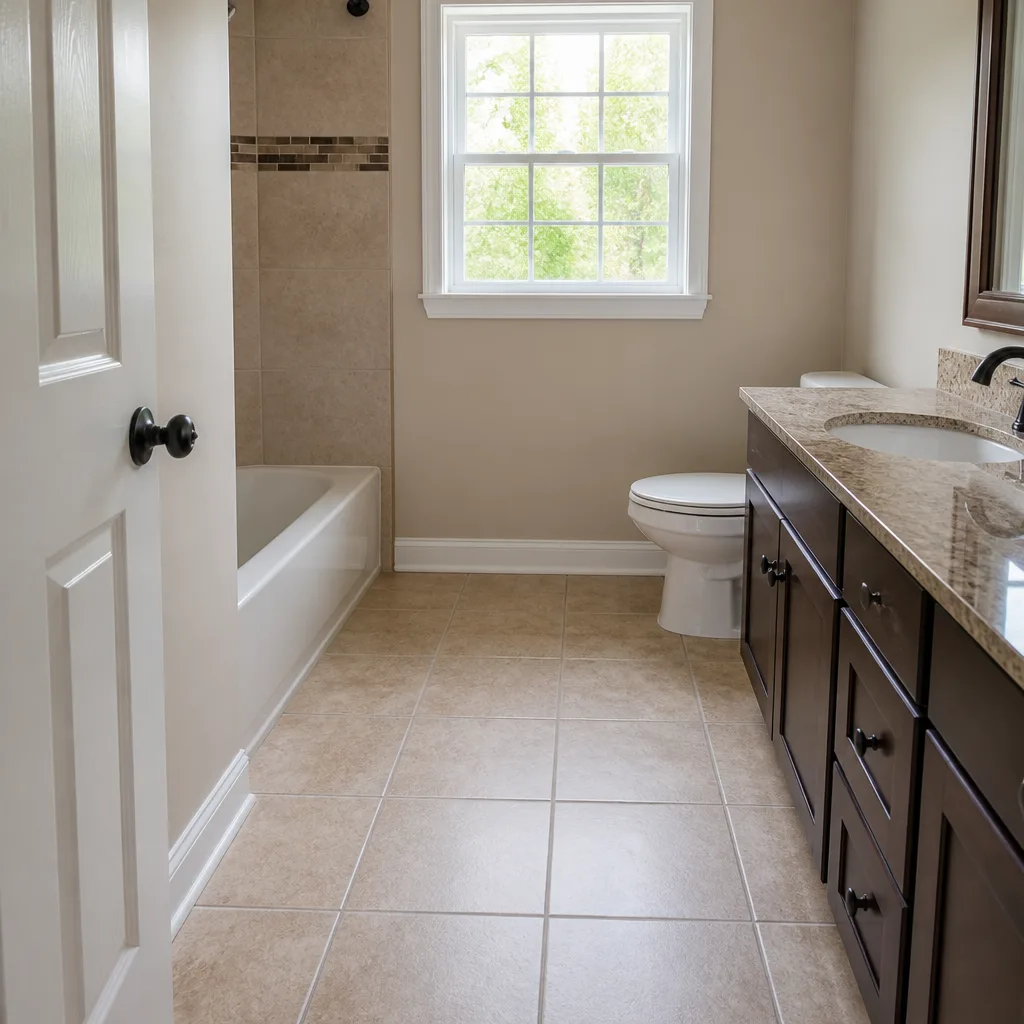 Sewage cleanup
 Reconstruction
Free visual inspection and a written scope of work before any mitigation begins - photos, moisture readings, and drying logs go in your claim file
The scope we write is the scope we bill. Anything new gets shown to you, in writing, before we touch it.
Get your free estimateFast, Reliable Storm Damage Restoration Across Dallas
Storm damage in Dallas doesn’t give you time to research. A hailstorm cracks your roof decking, water finds the gap, and within hours you’re looking at soaked drywall and wet insulation. Most storm water extraction jobs in Dallas run between $1,200 and $3,800 depending on how far the water traveled, and we can have a licensed, background-checked crew at your door typically within 60 to 90 minutes. Call (432) 529-4284 and a live person answers, day or night. That’s not a call center. That’s someone in the Dallas-Fort Worth office who can dispatch immediately.
We’ve worked Dallas storm losses long enough to know what you’re up against before we even pull up. Expansive clay. Aging cast iron. Brick veneer ranches from the 1960s. Hail-belt storms that show up fast and leave slow damage behind. You need someone who knows this city’s houses, not just water extraction. We’re the local Storm Damage Restoration crew that does both.
Why Marsh Water Damage Dallas Is Dallas’s Preferred Storm Damage Restoration Company
Marsh Water Damage Dallas has restored homes across Dallas since 2005, and the city’s storm profile is burned into our process at this point. We know which neighborhoods flood first when the Trinity rises, which 1950s-era subdivisions still run original cast iron drain lines, and which hail corridors consistently shred roof flashing in April and May. That local knowledge changes how fast we find the real source of water, and it’s why Dallas homeowners keep calling us back.
Every technician who knocks on your door is Threshold Verified. That means background-checked, identity-verified, uniformed, and photo-badged. Before we arrive, you get the tech’s name and photo sent to your phone. At the door, they show a matching photo ID badge. No exceptions. If you’re home alone, a parent with kids asleep upstairs, or an older homeowner, you know exactly who’s stepping inside before the door opens. Tobias Reyner runs this operation with a simple rule: no anonymous crews, ever.
Our team holds IICRC, RIA, and IFA credentials. We run Dri-Eaz, Phoenix, XPOWER, B-Air, and Injectidry equipment, the same commercial-grade drying tools used on big losses. And every job gets a written price before work begins and a written 365-Day Done Right Promise. If it’s not right within a year, we come back and make it right, free second visit included, automatically. Printed on the work order. Not a conversation you have to have.
Restoration work we handle
Flood Restoration in Dallas
Flood restoration in Dallas usually starts the same way: a storm dumps more water than drainage can move, and water enters through a door threshold, a window well, or an overwhelmed garage drain. The first 24 hours dictate whether you’re looking at extraction and drying or full demolition. In our Dallas market, a typical residential flood restoration runs $1,800 to $4,500, depending on square footage, how long water sat, and the water category. Category 1 is clean supply water. Category 2 has some contamination. Category 3, from flash flooding or sewage backup, requires containment, antimicrobial treatment, and often disposal of saturated porous materials.
Water Extraction and Structural Drying
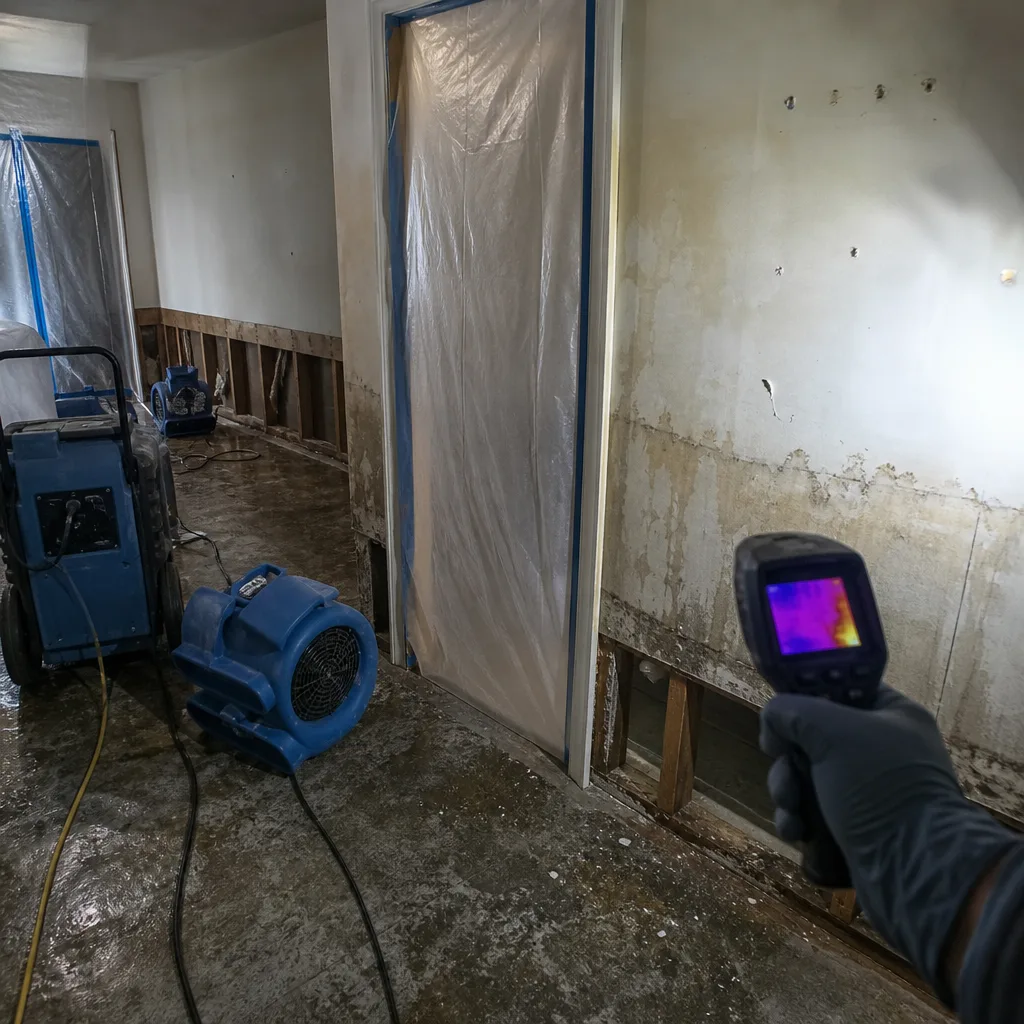
We start by mapping moisture across every affected surface with thermal imaging and psychrometric readings. In Dallas slab homes especially, water hides under tile, terrazzo, and glued-down flooring for days before it shows itself. We extract standing water, pull affected materials, set containment, and position air movers and dehumidifiers in a drying chamber. Then we return daily to re-measure until the structure hits pre-loss moisture levels. Not dry on the surface, dry all the way through.
When Flood Water Means Pack-Out and Rebuild
If Category 3 water touched your baseboards, drywall, or flooring, those materials usually come out. We photograph everything, create a line-item inventory, and coordinate directly with your adjuster. We pack out salvageable belongings and store them off-site while the structure dries. You get a written scope before demo starts, so you know the full number before a single wall is opened.
Basement Flood Cleanup in Dallas
Basement flood cleanup in Dallas is less common than in northern cities, but when we see it, it’s usually a finished basement in an older home near a creek or low-lying area like parts of East Dallas, where groundwater pressure and outdated sump systems fail during tropical downpours. Most basement flood cleanups in Dallas range from $1,500 to $3,200, though a finished basement with drywall damage and electrical exposure can push toward $5,000 or more. Water pools fast, and the access is always terrible. That’s the reality.
Groundwater Intrusion and Sump Systems
Flash flooding in Dallas doesn’t just come through windows. In neighborhoods with basements near White Rock Lake or along old creek beds, hydrostatic pressure pushes water up through the slab and wall joints. We extract, dry, and then we tell you straight whether your sump pump is undersized for what Dallas storms actually deliver. Most aren’t. Replacing a sump system with a properly sized unit and battery backup typically adds $800 to $1,500 to the job, and it’s worth every dollar before the next spring storm cycle.
Moisture Mapping and Mold Prevention
Basements stay humid, and a flooded basement dries slow. We run continuous dehumidification until structural materials hit a target moisture content that won’t support mold, usually below 16% for wood. Then we test and document. If mold has already started anywhere in the space, our mold remediation team steps in with containment and antimicrobial treatment as part of the same scope. No second company, no separate appointment.
Trusted Brands We Service in Dallas
We work on every major brand in Dallas, including older systems you’ll find throughout the Park Cities and Lakewood, and we stock common parts locally so we’re not waiting on a carrier from Houston or Oklahoma City when your garage door is down. Fast turnaround is part of why Dallas homeowners call us first. If your opener, springs, or panels came from a major manufacturer, we have the parts and the experience to restore it properly.
See the difference
 Before
 After
After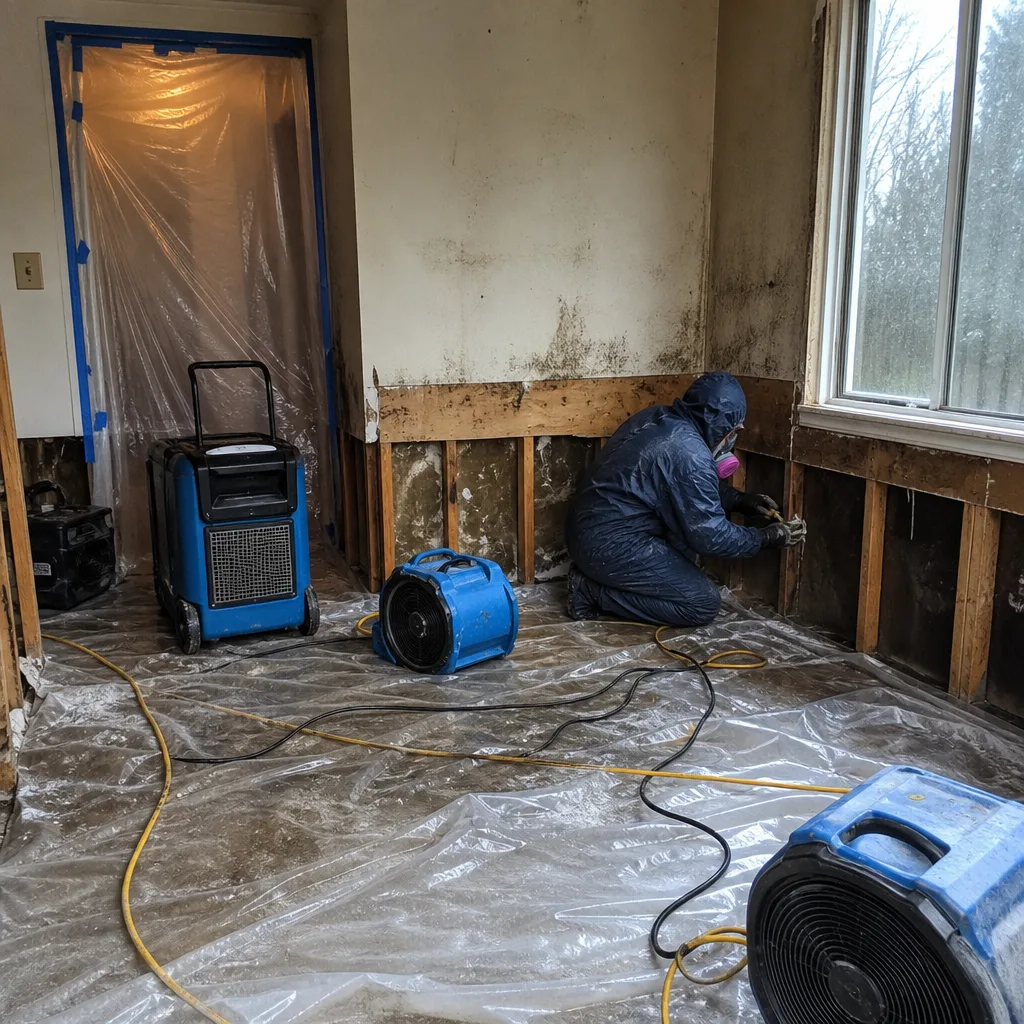 Before
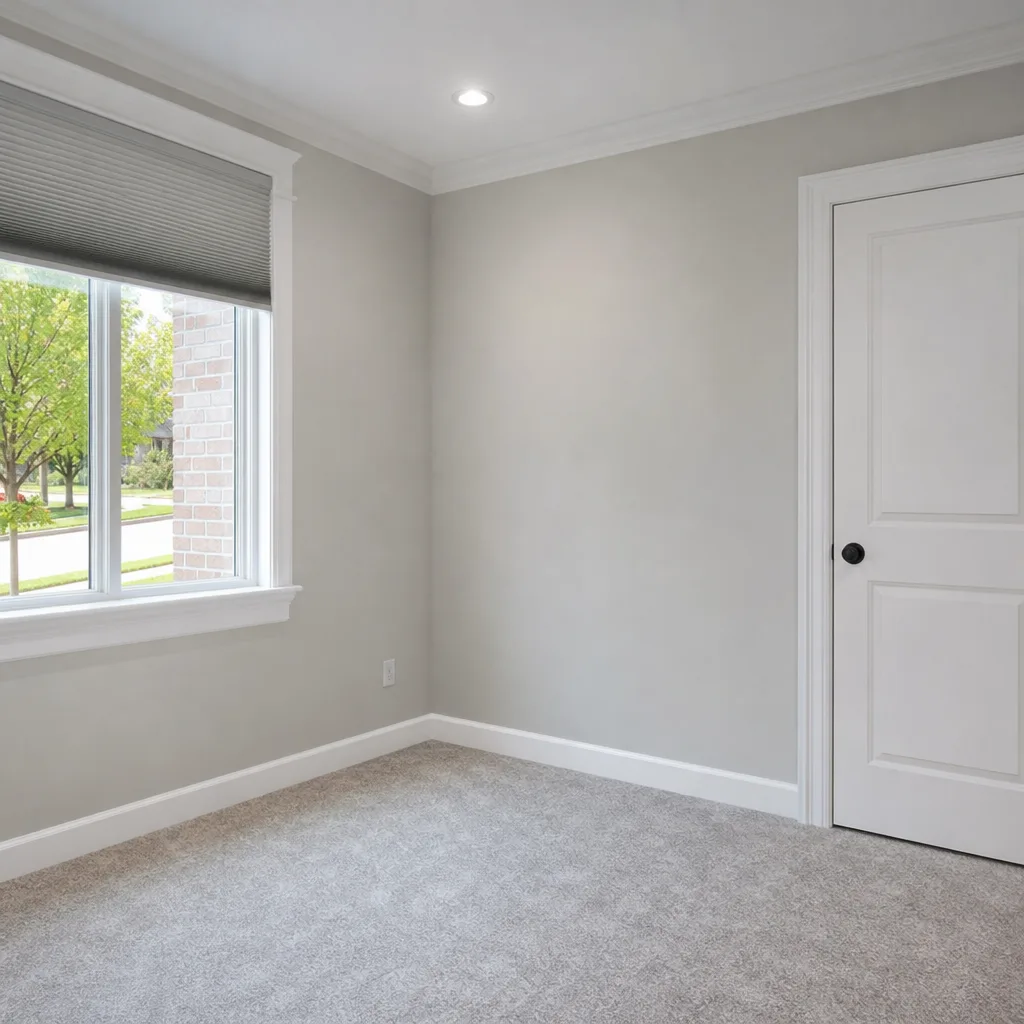 After
After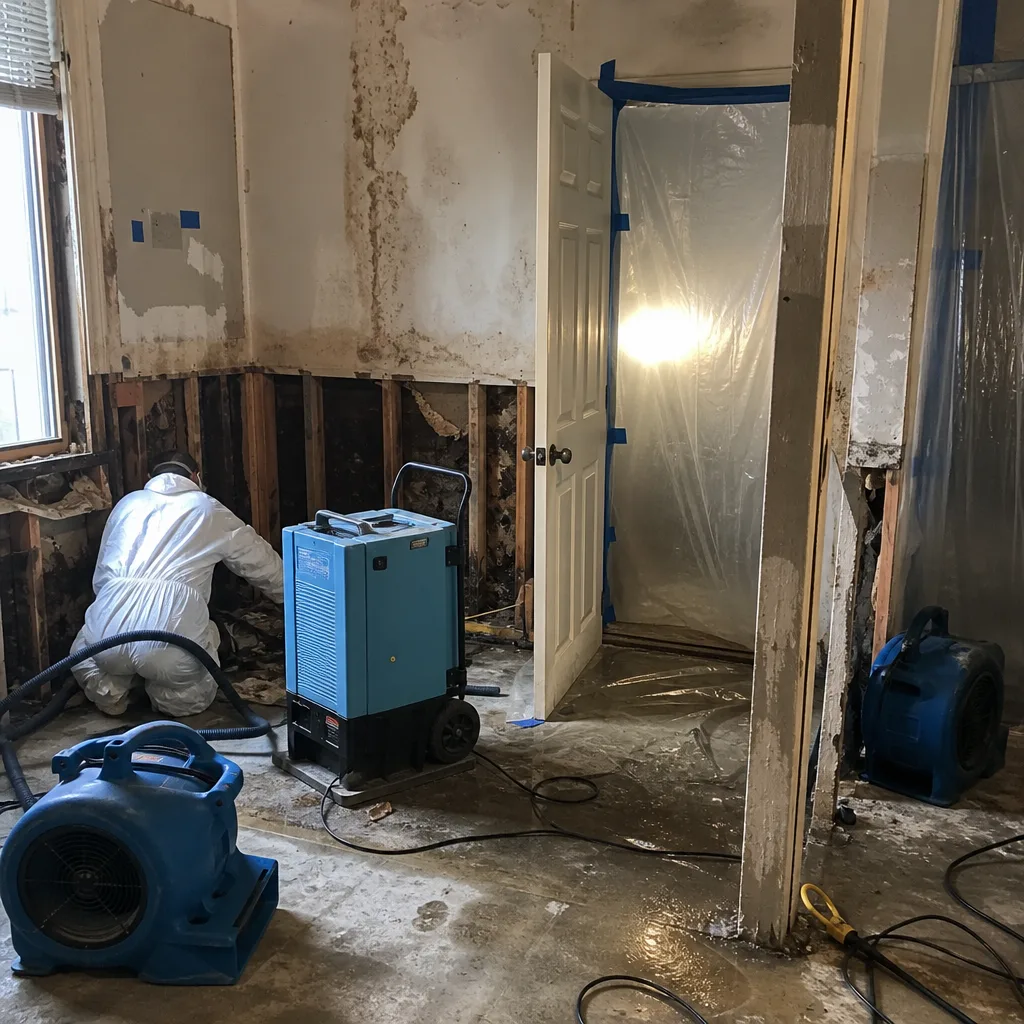 Before
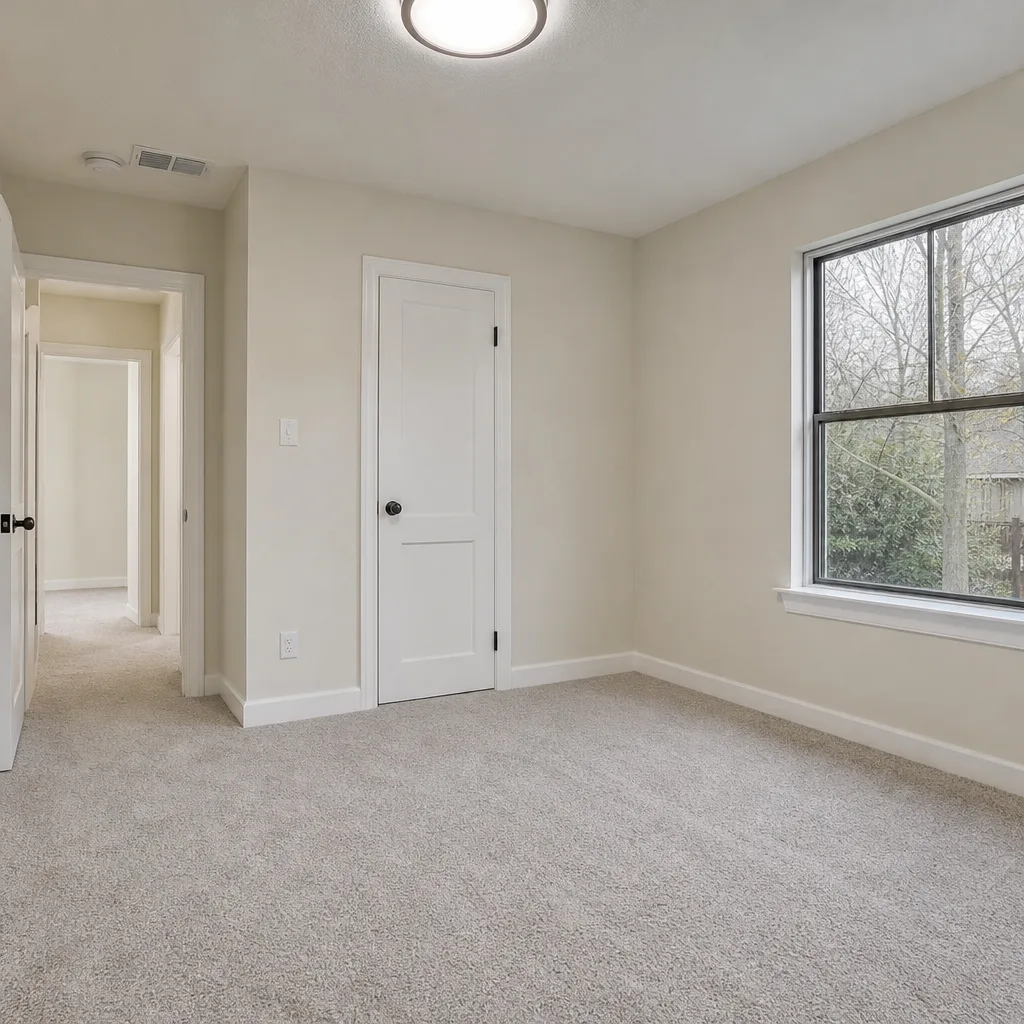 After
AfterCommon Storm Damage Restoration Problems We See in Dallas Homes
- Cast iron pipe failure under slabs from expansive clay. Dallas sits on clay that swells during wet springs and shrinks during hot, dry summers. Over decades, that movement cracks 1950s-70s cast iron lines under slab foundations. A single storm often reveals a pipe that’s been failing quietly for years.
- Hail-damaged roof decking and flashing on brick veneer ranches. Dallas hail in April and May is intense and frequent. On 1960s brick veneer ranches, cracked decking and failed flashing let water into attic insulation, which stays damp because ridge venting is undersized for our storm intensity. By the time water shows on a ceiling, it’s been wet for days.
- Flash flooding overwhelming slab-on-grade drainage. Heavy thunderstorms drop more water in an hour than Dallas’s older storm drains were designed to move. Water pushes into attached garages, soaks stored belongings, and turns the garage into a migration path into the main house.
- Post-storm humidity slowing structural drying. After a Dallas storm, outdoor air is often saturated. Running air movers without proper dehumidification only pushes moisture deeper into drywall and framing. You need a drying chamber, not just fans.
Pricing for Storm Damage Restoration in Dallas, TX
Storm damage restoration in Dallas homes most often lands between $1,200 and $4,500. A single-room water extraction from a roof leak might start around $1,200. A whole-home flash flood or slab leak with packed-out belongings, containment, and multiple days of structural drying can run $3,800 to $6,500. Broken cast iron under your slab that requires a repipe adds plumbing costs, and we refer or coordinate with licensed plumbers for that portion. Every Marsh job starts with a free, written estimate. You’ll know the price before work begins, and the price doesn’t balloon after demo starts. Call (432) 529-4284 for an exact quote.
We Also Serve Cities Near Dallas
Our techs cover the broader Dallas metro, including Dallas proper and nearby communities like Irving, Duncanville, Balch Springs, and Grand Prairie. If you’re in one of those cities with storm damage, call the same number and we’ll route the closest crew to you.
Serving Dallas, TX - Our Local Coverage Area
We’re based in the Dallas area and know this community well. Use the map below to see our service coverage - if you’re nearby, we can almost certainly help.
FAQs About Storm Damage Restoration in Dallas
Dallas sits on expansive clay that swells with rain and shrinks in drought, which slowly shifts slab foundations and cracks the cast iron drain pipes installed under many homes built from the 1950s through the 1970s. When a storm hits, water follows those cracks into the slab and up through flooring. That means restoration isn’t just about drying. It’s about finding whether the water came through a roof leak, a door, or a pipe under your foundation. If it’s the pipe, you need a plumber and a restoration crew coordinating together, because drying the slab without fixing the pipe means the same flood returns next wet season.
In most older Dallas homes, if one section of cast iron under the slab has cracked, the rest of the line is fatigued, and we typically recommend a whole-home repipe rather than a spot repair. Dallas’s wet-dry clay cycles stress the entire run, not one joint. A spot repair costs less up front but often fails again within a couple of storm seasons. The repipe is a bigger project, but it ends the cycle. We’ll dry the structure, document everything, and coordinate with a licensed plumber so you get one clear scope, not two competing estimates. Call (432) 529-4284 and we’ll walk you through what we’re seeing under your slab.
You need water extraction within 24 to 48 hours, and sooner is always better in Dallas’s humid post-storm air. After 48 hours, mold starts to form, drywall wicks water upward, and flooring delaminates. In slab homes, water that contacts the slab also accelerates any existing cast iron corrosion. We dispatch crews within 60 to 90 minutes to most Dallas neighborhoods, day or night. Call (432) 529-4284 the moment you see water, and don’t wait until morning.
Containment means sealing off the affected area with plastic sheeting and negative air pressure so dust, mold spores, and contaminated water droplets don’t spread to clean rooms. Pack-out means we inventory, photograph, and remove salvageable furniture and belongings from the work zone, then store them off-site until the structure is dry and restored. In Dallas storm losses, pack-out is common when Category 3 water enters a finished living space or when a roof leak soaks a whole bedroom suite. You get a written inventory of everything we moved, and nothing gets thrown away without your sign-off.
Category 3 water, what most people call flood water, carries sewage, chemicals, and bacteria from storm runoff, and we treat it as a contamination event. We extract, remove saturated porous materials like carpet and drywall, apply antimicrobial treatment to remaining surfaces, and run containment throughout. Porous items touched by Category 3 water are typically not restored; they’re disposed of and documented. We photograph everything for your insurance claim and coordinate directly with your adjuster. If you’ve had flash flooding in Dallas, call (432) 529-4284 before you try to clean it yourself.
Written by Tobias Reyner, Owner at Marsh Water Damage Dallas, serving Dallas since 2005.